
ARCHIE BLACKOWL
Archie Blackowl (1911–1992) was a Southern Cheyenne painter. Works by Archie Blackowl are available through Trotta-Bono Contemporary, a by-appointment gallery specializing in contemporary Native American art in Santa Monica, California.
— ARCHIVE —
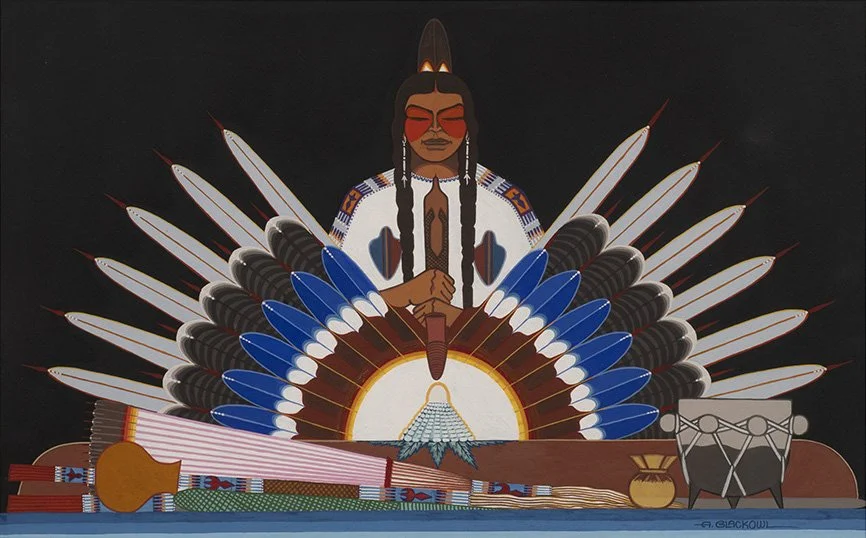
Untitled (Peyote Ceremony)

Untitled

Untitled

– ARCHIE BLACKOWL –
Cheyenne, 1911-1992
Archie Blackowl was a celebrated Native American painter and an important figure in the twentieth-century Southern Plains art tradition. A member of the Cheyenne Nation, he was born in Custer County, Oklahoma, and grew up immersed in Cheyenne cultural traditions. He studied at the Bacone Indian School in Muskogee, Oklahoma, where he was influenced by the school’s emphasis on Native art and by artists such as Acee Blue Eagle. Blackowl became known for his distinctive flat-style paintings, characterized by vivid colors, strong outlines, and dynamic compositions depicting Cheyenne ceremonies, dancers, hunting scenes, and everyday life. His work combined a highly stylized visual language with a deep connection to his cultural heritage.
Blackowl gained national recognition through exhibitions of Native American art, particularly the annual Indian Art exhibitions at the Philbrook Museum of Art in Tulsa, where his work was repeatedly exhibited and received awards. His paintings were also shown at institutions including the Heard Museum in Phoenix and in traveling exhibitions that helped bring the work of Native artists to audiences throughout the United States. His participation in these exhibitions placed him among the prominent Native painters of his generation and contributed to the broader recognition of the Southern Plains painting tradition.
Blackowl’s work is represented in numerous museum and institutional collections, including the Smithsonian’s National Museum of the American Indian, the Gilcrease Museum, the Philbrook Museum of Art, the Heard Museum, the Denver Art Museum, the Fred Jones Jr. Museum of Art at the University of Oklahoma, the Museum of Indian Arts and Culture in Santa Fe, and the Sam Noble Oklahoma Museum of Natural History. His paintings are also held by other regional museums, universities, and private collections. Through his vibrant depictions of Cheyenne life and ceremony, Blackowl helped establish the importance of Native American painting within the American art historical canon and remains an important figure in the development of twentieth-century Indigenous art.