EVER-CHANGING NATIONS
Exhibition Dates: February 28 – April 30, 2026
By appointment: March 9th – April 30th
2447 Main Street
Santa Monica, CA 90405
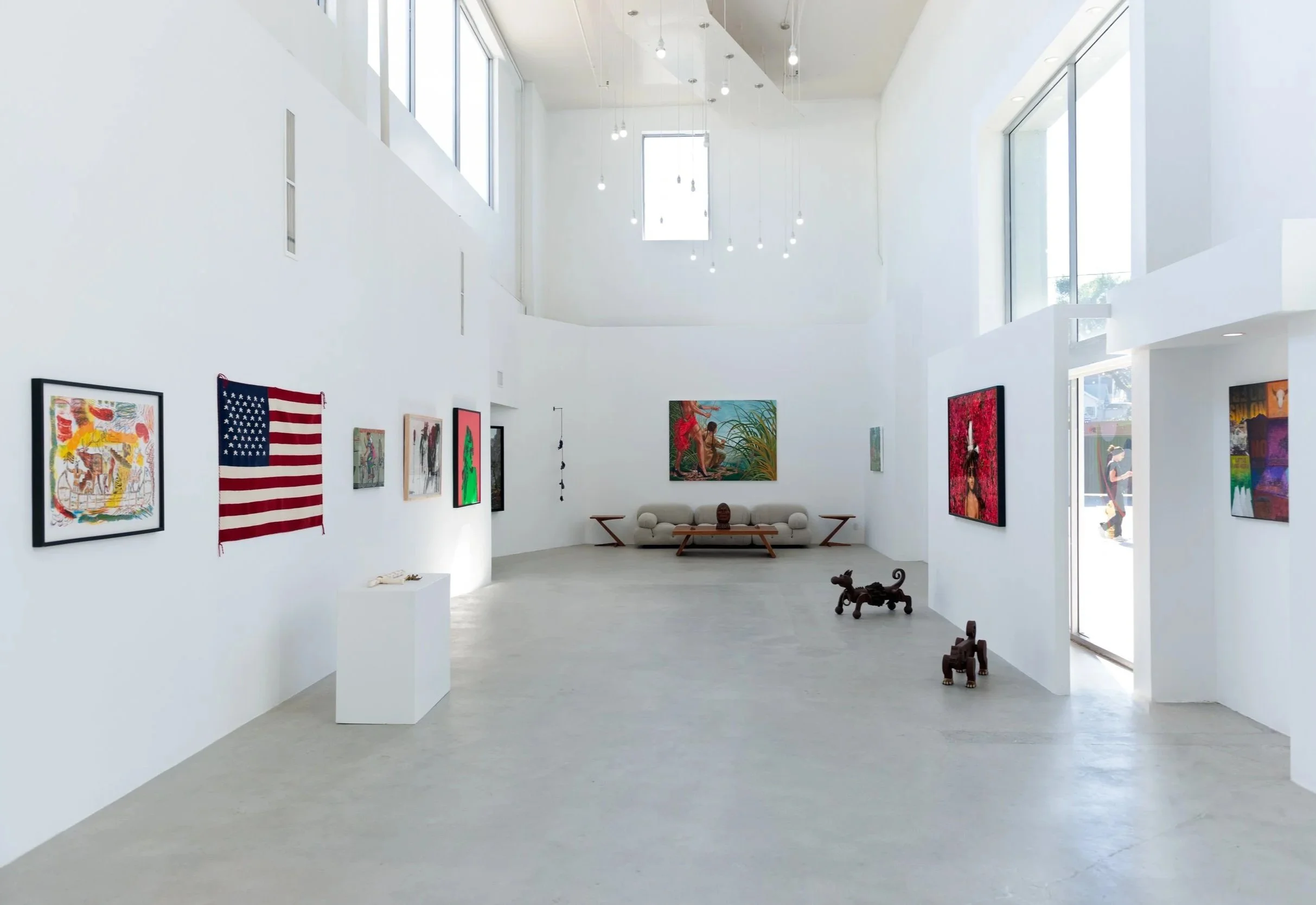
Ever-Changing Nations presents a visually compelling reconsideration of dominant historical narratives in the United States. Anchored by major works from some of the most influential Native American artists - both living and deceased - the exhibition reexamines the language of commemoration through counter-history, satire and the enduring power of Indigenous representation. Rather than treating 1776 as a fixed point of origin, Ever-Changing Nations approaches it as a contested beginning shaped by displacement, resistance, and survivance that continue to define the present.
Bringing together an intergenerational group of leading Indigenous artists - including Cara Romero, Kent Monkman, Cannupa Hanska Luger, David Bradley, Jaune Quick-to-See Smith, Rick Bartow, Fritz Scholder, T.C. Cannon, Richard Glazer-Danay, Pop Chalee, Rose Simpson, Bob Haozous, Nicholas Galanin, Will Wilson, Craig George and Chris Pappan - the exhibition foregrounds Indigenous voices as central authors of American history rather than its subjects. Romero's monumental portraits assert presence and contemporary identity, while Monkman's expansive history paintings overturn colonial narratives with wit, scale and theatrical command. Across painting, sculpture, photography, and mixed media, the broader group of artists extends this conversation - probing myth, memory, land, humor, spirituality and political reality with urgency and range.
A newly conceived multimedia and video installation by Virgil Ortiz expands his ongoing Pueblo Revolt 1680/2180 series into a cinematic realm of clay, film, sound and immersive storytelling. The work collapses time, reframing Indigenous resistance not as a closed historical chapter, but as an active, unfolding continuum - one that reverberates across centuries and into the future.
Presented in the gallery's new Santa Monica space, Ever-Changing Nations invites viewers to encounter the past as living terrain and to consider futures grounded in sovereignty, memory, cultural continuity, and collaborative discourse.
A Conversation - Kent Monkman & Amy Scott
Co-hosted by Trotta-Bono Contemporary and Walker Youngbird Foundation
Friday, February 27, 2026
THE ARTWORK
POP CHALEE
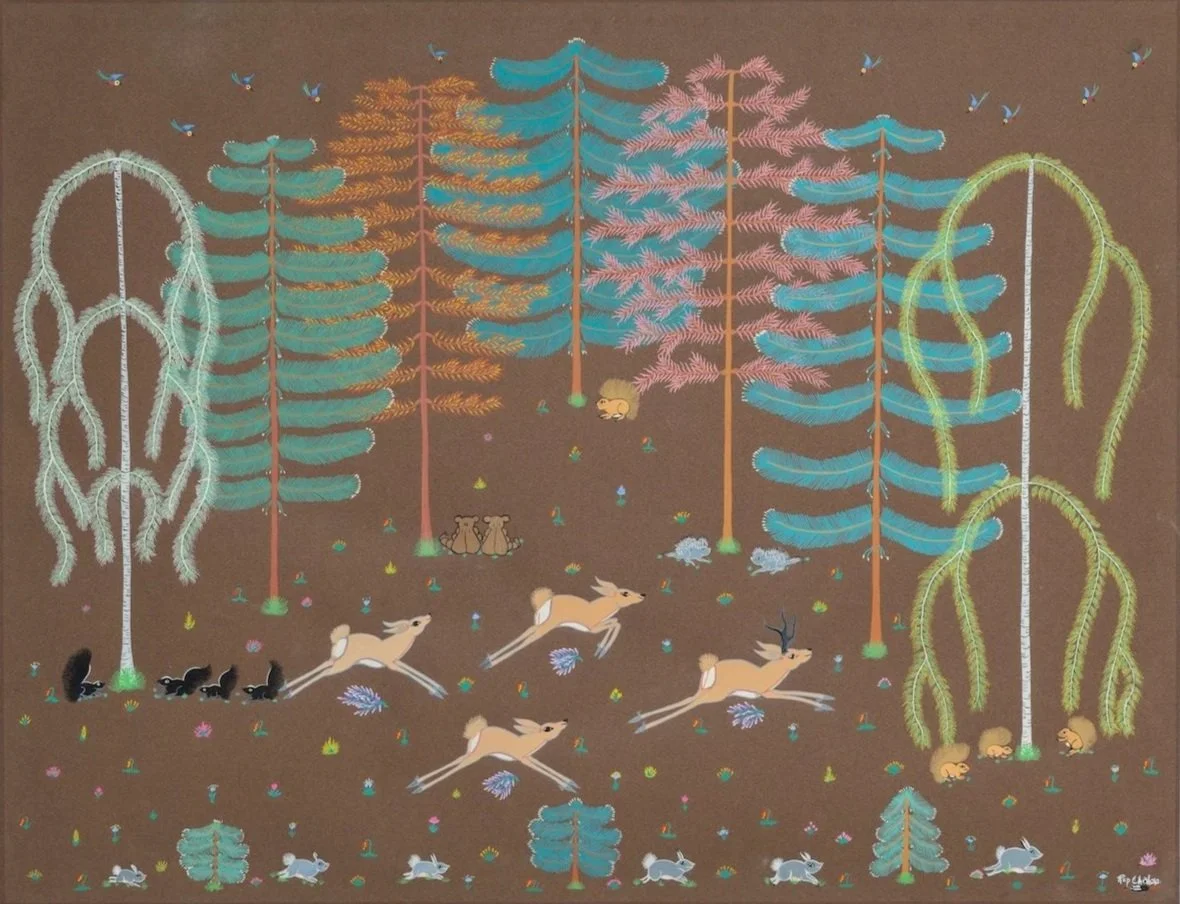
Pop Chalee organizes the forest through vertical repetition and stylized procession. Deer move in calm alignment beneath towering trees rendered with Native American “studio-style” clarity. The painting resists illusionistic depth in favor of surface and rhythm. The landscape here is ordered, inhabited and continuous. Chalee’s restraint gives the work its authority and purity.
BOB HAOZOUS
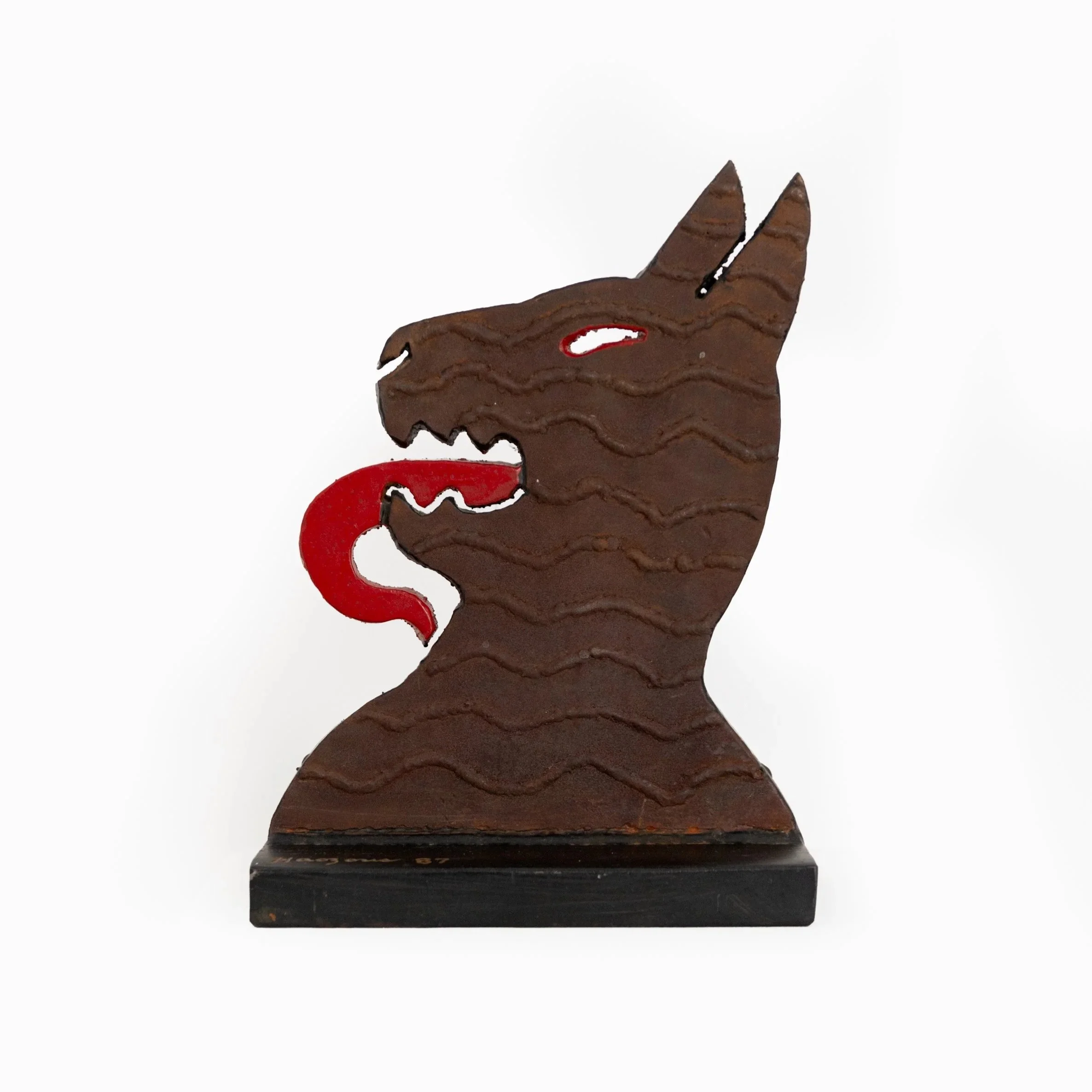
Bob Haozous’ steel coyote head combines rugged strength with playful energy. The compact, heavy form is enlivened by a long red tongue and flowing wavy weld lines, capturing the coyote’s restless spirit. This sculpture reveals the animal’s fierce yet lively character beneath its industrial exterior.
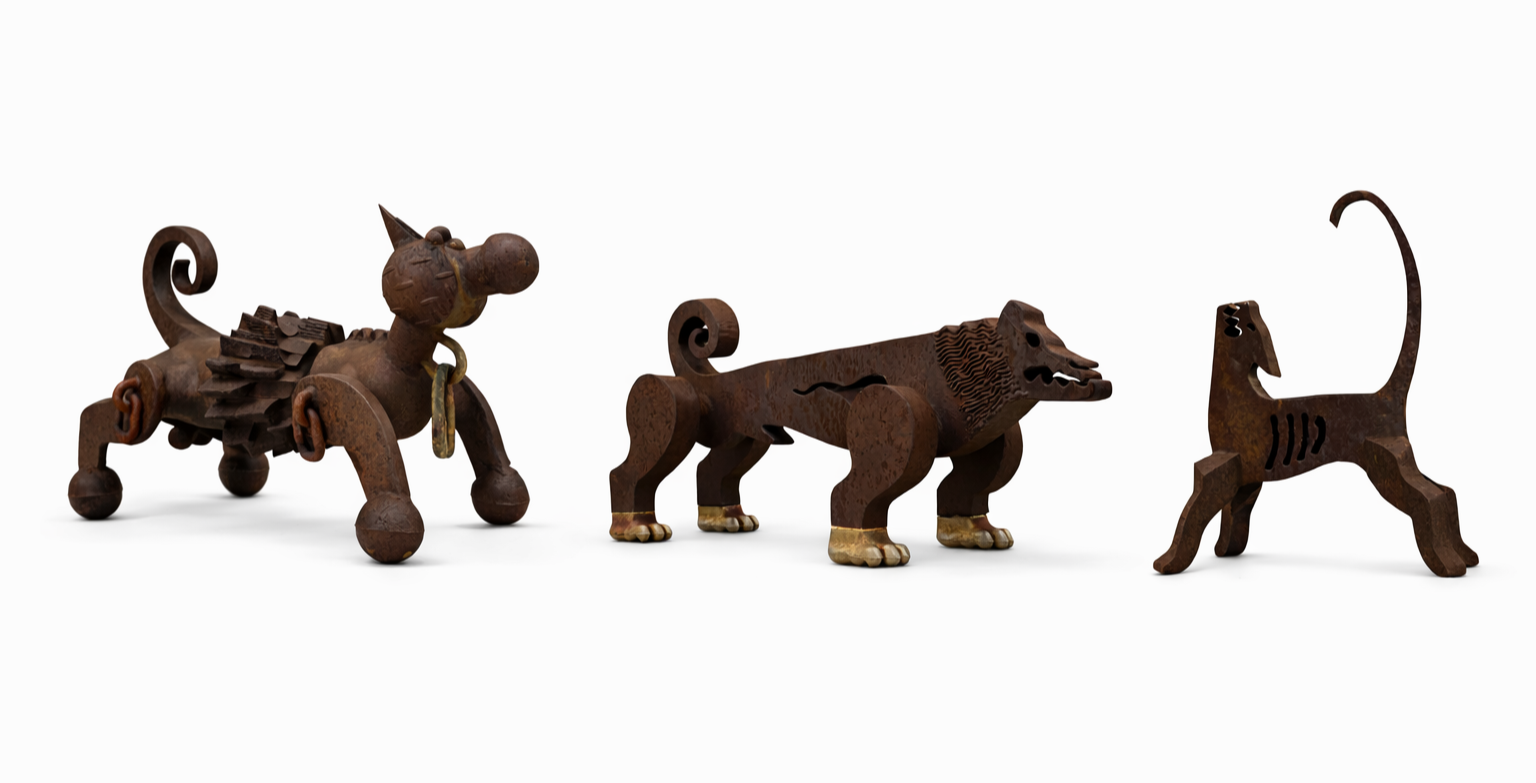
L to R: Untitled | Groo | Untitled (Cat Form)
circa 1990s
With its curling tail, upraised nose, and playful stance, Untitled suggests a friendly pet ready for a game of fetch. The piece contrasts monumentality and fragility, constructed with steel and ornamented with chain links and a drill bit as a torso, the open form echoes the artist’s ongoing meditation on endurance, adaptation, and cultural continuity. Despite the literal weight of the piece, Haozous introduces lightness and animates the figure with personality and joy, while still commenting on how the human presence can disrupt nature.
In Groo, Haozous conjures a hybrid creature, part animal, part spirit, part invention. The name itself suggests playfulness, yet the form and steel structure convey gravity and weight. Haozous frequently created beings that feel ancient and futuristic at once, collapsing time in a manner consistent with Indigenous cosmologies. With a sense of hybrid vitality and spiritual charge, Groo operates as a personal cosmological figure — part guardian, part trickster, part commentary on the human-animal boundary. Its material solidity contrasts with the imaginative freedom of its form, reinforcing the enduring themes in Haozous’s work: that identity, like sculpture itself, is shaped through both pressure and imagination.
Haozous’s steel sculpture represents a stylized feline figure standing alert, its body tensed, ready to howl. With an elongated tail arching in a sweeping curve that animates the entire composition, the body is articulated with bold planes using negative space cut through the torso to suggest ribs and sharp teeth. Haozous uses industrial steel, which has oxidized into a deep, earthen rust, creating a surface that feels elemental and enduring. Haozous contrasts solidity and absence, between mass and void, with the skeletal cutouts, suggesting vulnerability and mortality, while the confident stance conveys resilience. For the artist, animal figures are not only literal representations but also carriers of spirit and commentary. The animal reads at once as a domesticated, predator, and mythic being, becomes both guardian and witness, embodying survival within landscapes shaped by colonial violence and environmental strain.
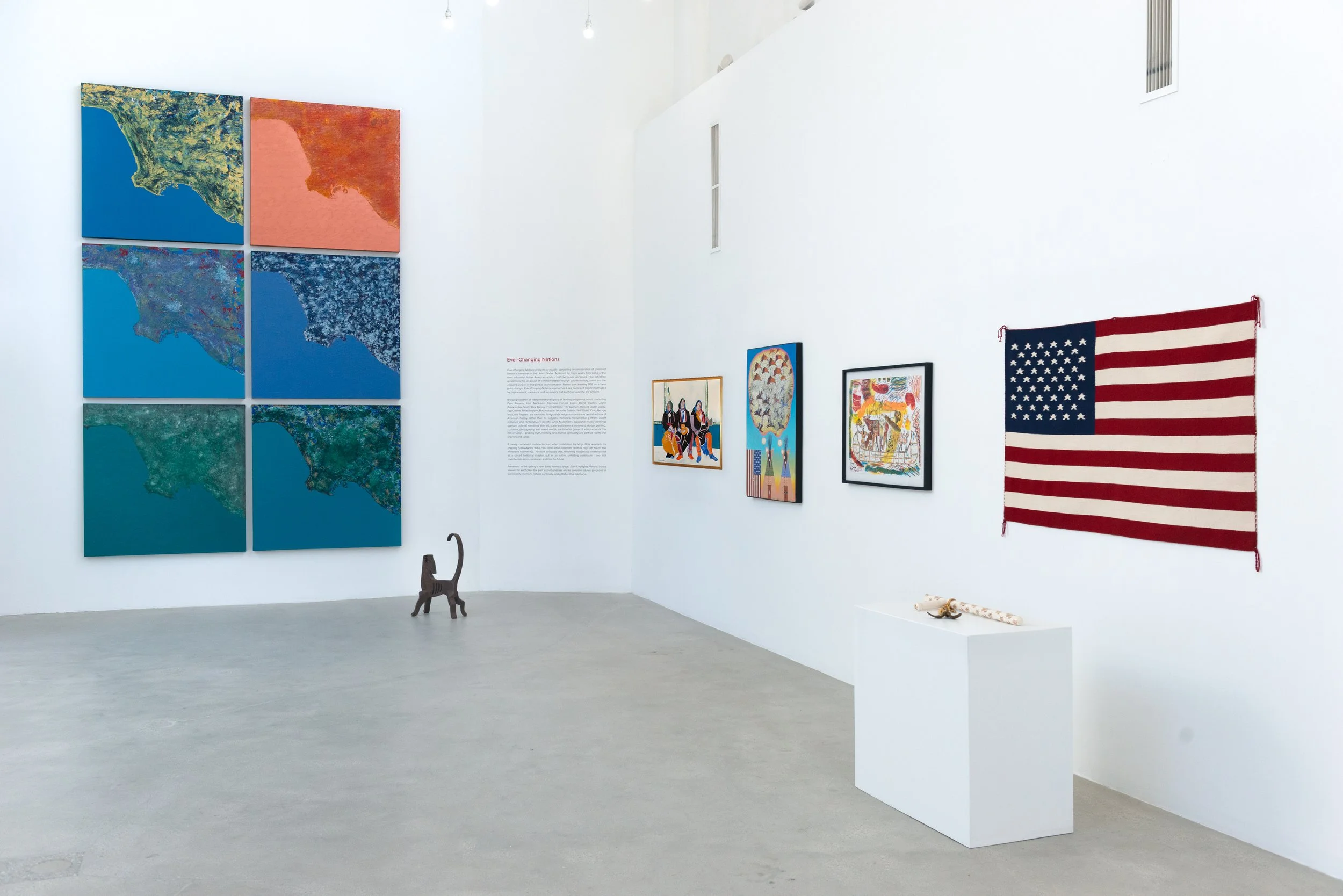
RICHARD GLAZER DANAY
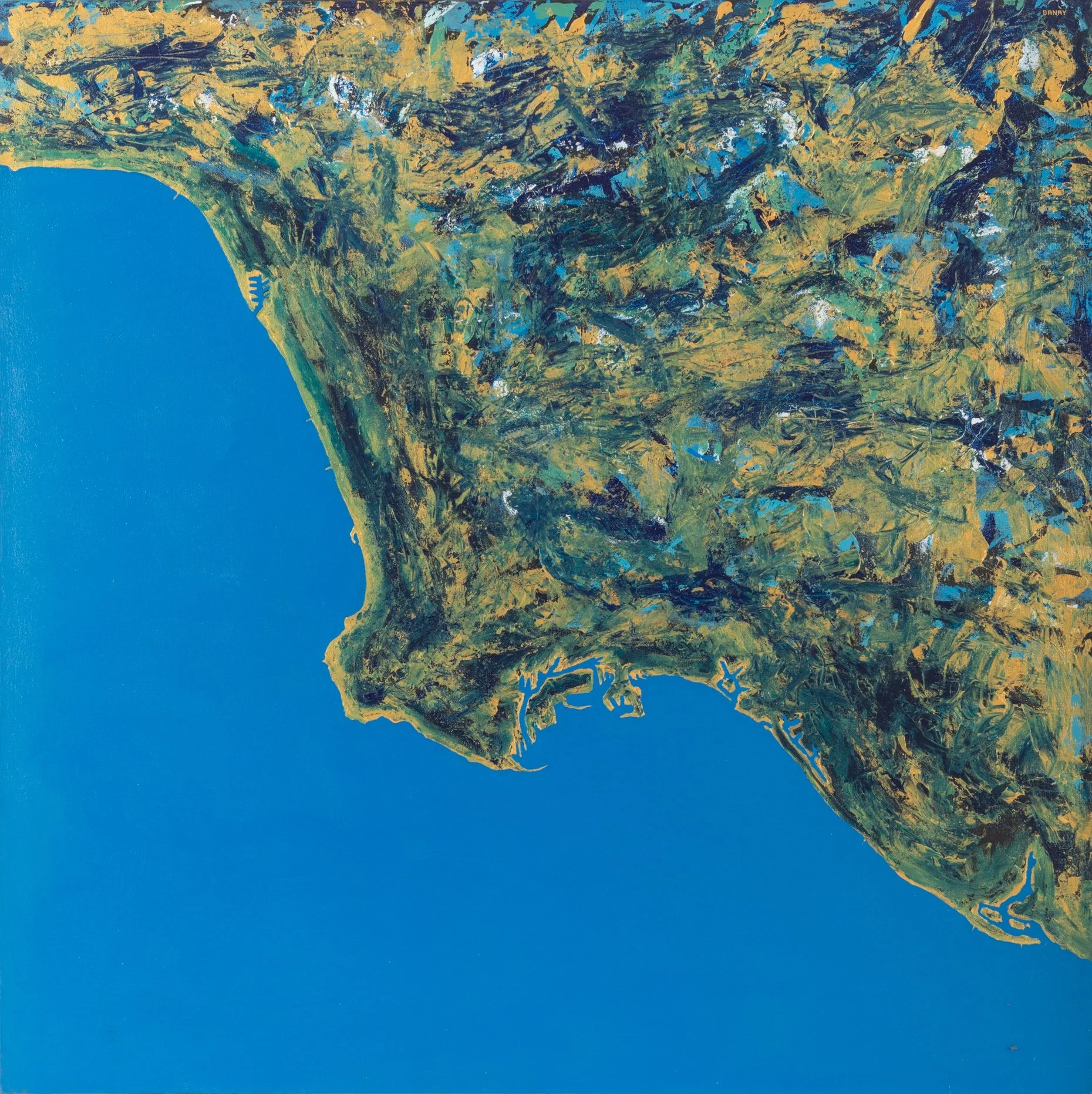

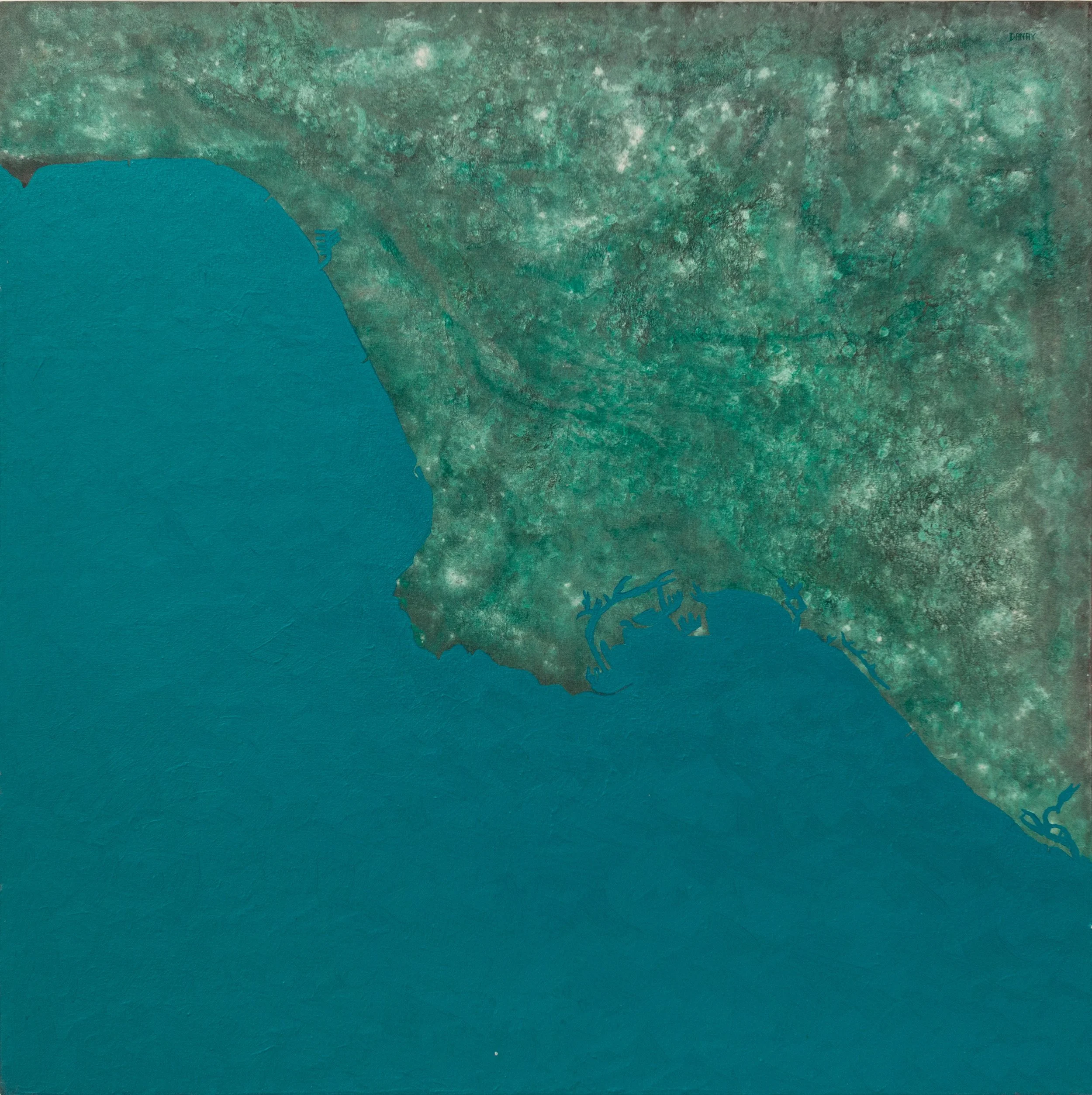
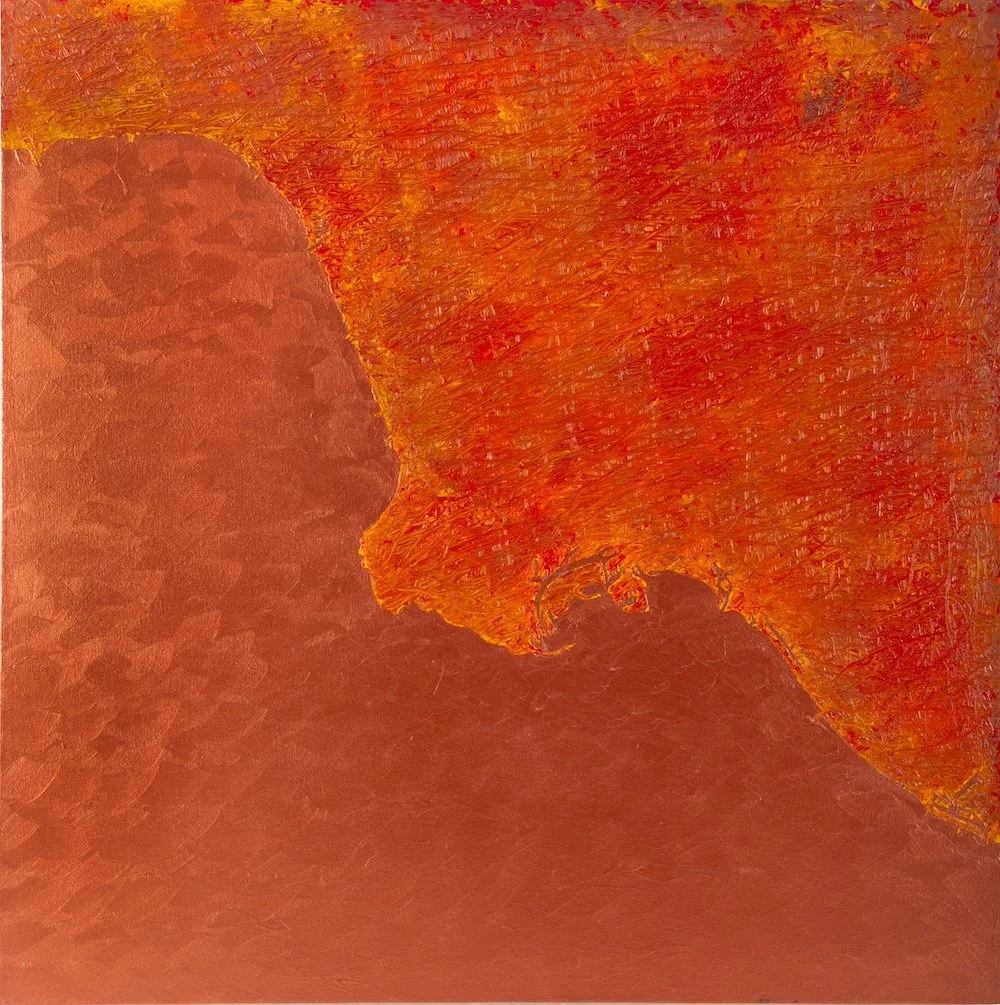
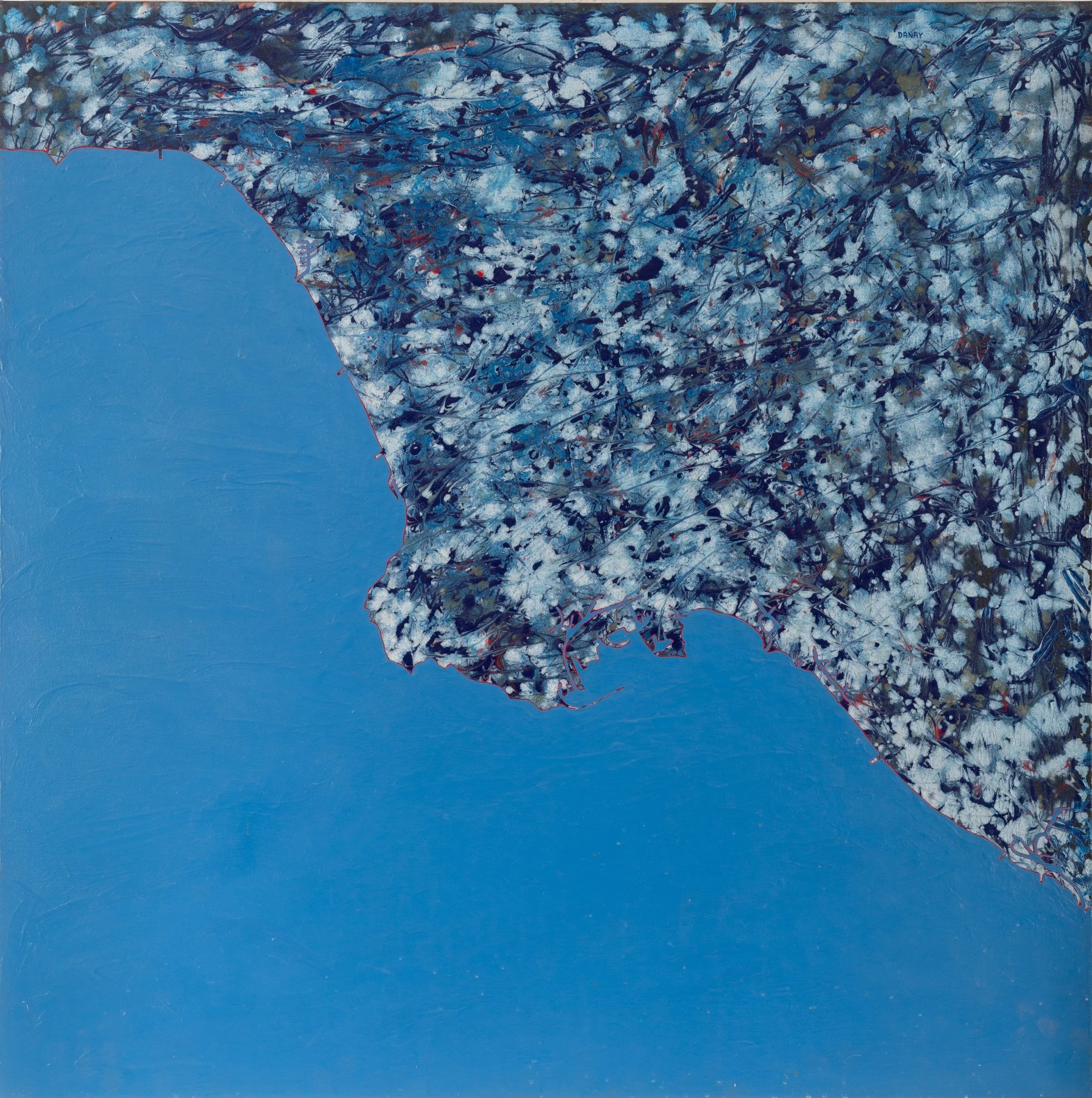

Richard Glazer Danay reduces Los Angeles to its coastline. Each canvas isolates the edge between land and Pacific, allowing atmosphere to shift while structure remains constant. Installed as a grid, the paintings read as serial observation rather than singular statement. The city dissolves; geography asserts itself. Danay’s interest in boundary — physical and cultural — is handled with excitement through bold color and a nod to pop art.
FRITZ SCHOLDER
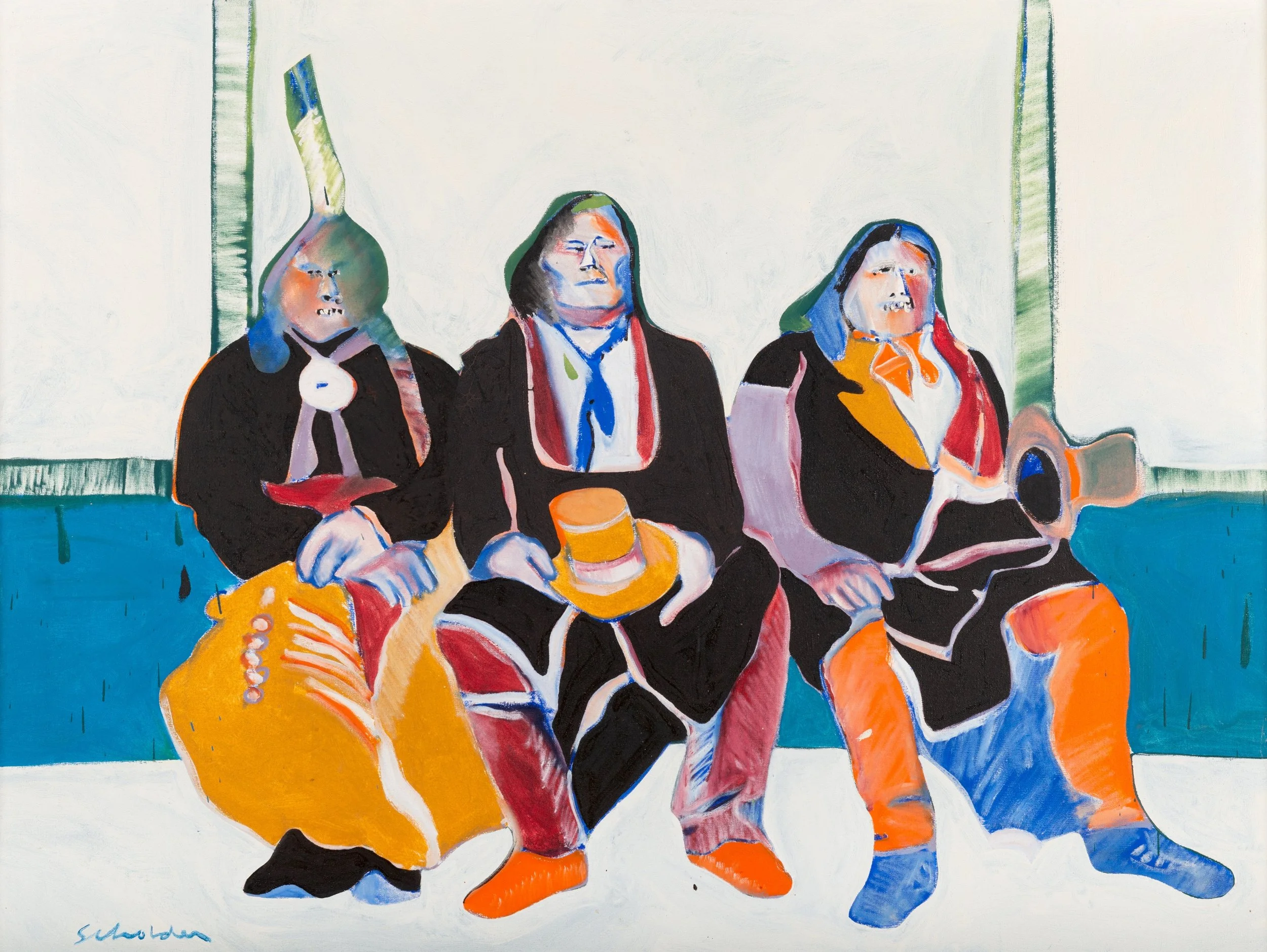
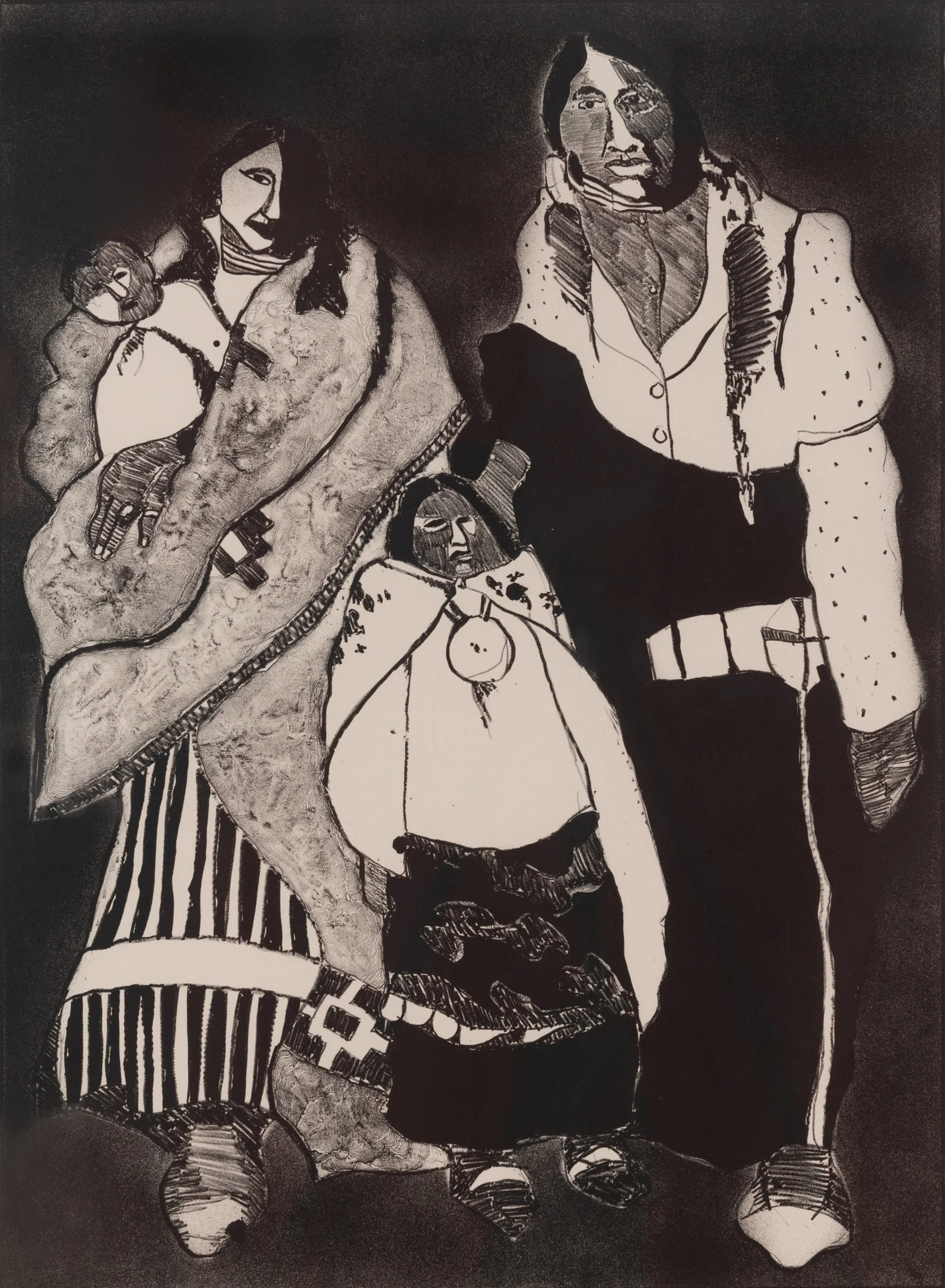
Fritz Scholder is celebrated for challenging the pre-existing Eurocentric portrayal of Native Americans. Indians in Washington, D.C. is likely sourced from, or modeled after, the work of seminal photographers such as Mathew Brady and his straight-forward delegation photos, or Edward Curtis and his objectified romanticizations.
In this masterpiece, Scholder depicts three Indigenous men dressed in a blend of Western attire and traditional garb. The figures are pressed between two vertical green bands. Their faces reveal an unnerving distortion, alluding to generations of horrific cultural trauma. The figures are wrought with emotion while transcending time and place to reveal a steadfast perseverance. Proudly waiting in a suspended setting, the men appear to be “stuck” between these two worlds. Why are they here? Have they traveled to advocate on behalf of their community? These warriors and elders have been forced to accommodate a western white society, yet they represent their cultural heritage in a visual act of resistance.
This work is a powerful and poignant commentary on history and the cultural, sociological, geographical and political manifestations that have been imposed upon Native populations. Simultaneously, Fritz Scholder celebrates Native identity and advocates for Native sovereignty.
DAVID BRADLEY
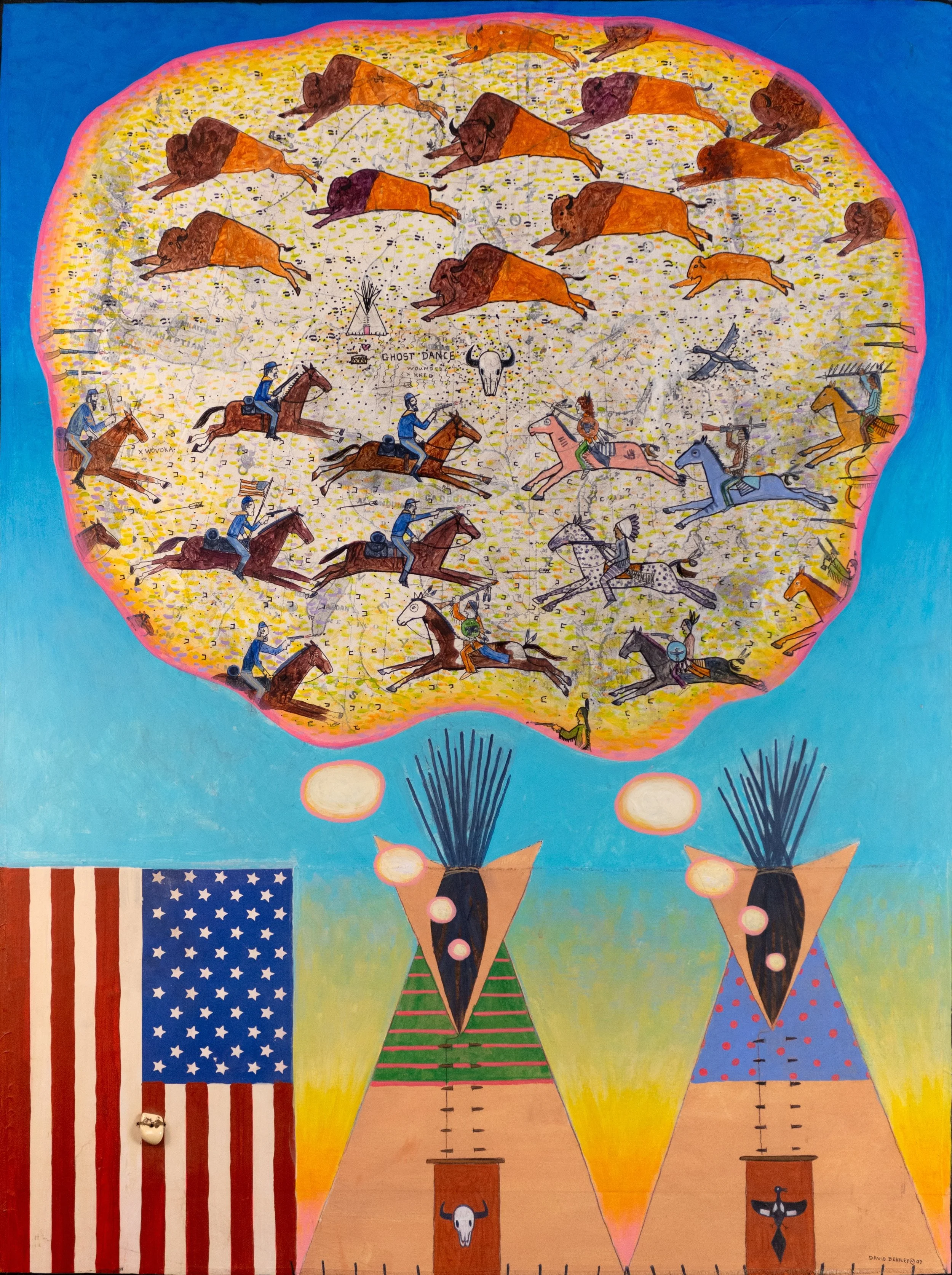
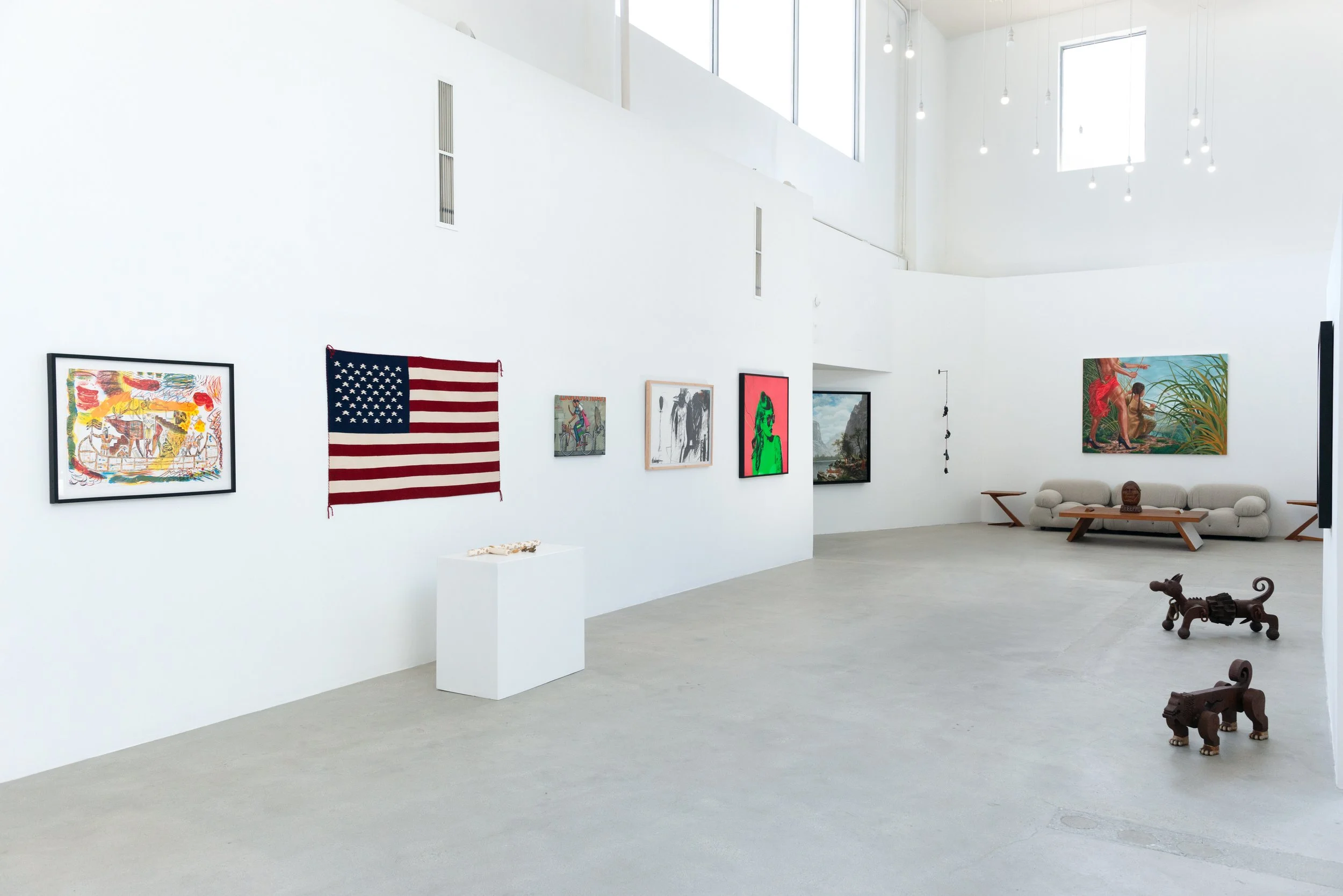
An inverted American flag occupies the lower left quadrant, a quiet signal of distress within an otherwise active scene. Two neighboring tribes—the Buffalo Clan and the Thunderbird Clan—sit in separate teepees, each contained within its own domain. Above them, Bradley introduces deliberately humorous thought bubbles: both envision the same outcome—a coordinated war against the U.S. Army advancing to slaughter the buffalo. The imagined battle plays out across a loosely rendered ledger-style map marked “Wounded Knee,” grounding the satire in historical reality. Bradley’s wit is sharp but measured; the humor carries the weight without exaggeration.
JAUNE QUICK-TO-SEE SMITH

Jaune Quick-to-See Smith has long used the canoe as both cultural form and socio-political vehicle. In this artwork, the vessel becomes a site of layered exchange – commerce, projection, myth. The phrase “Western Fantasy” undercuts inherited narratives with characteristic subtlety.
BERTHA HARVEY
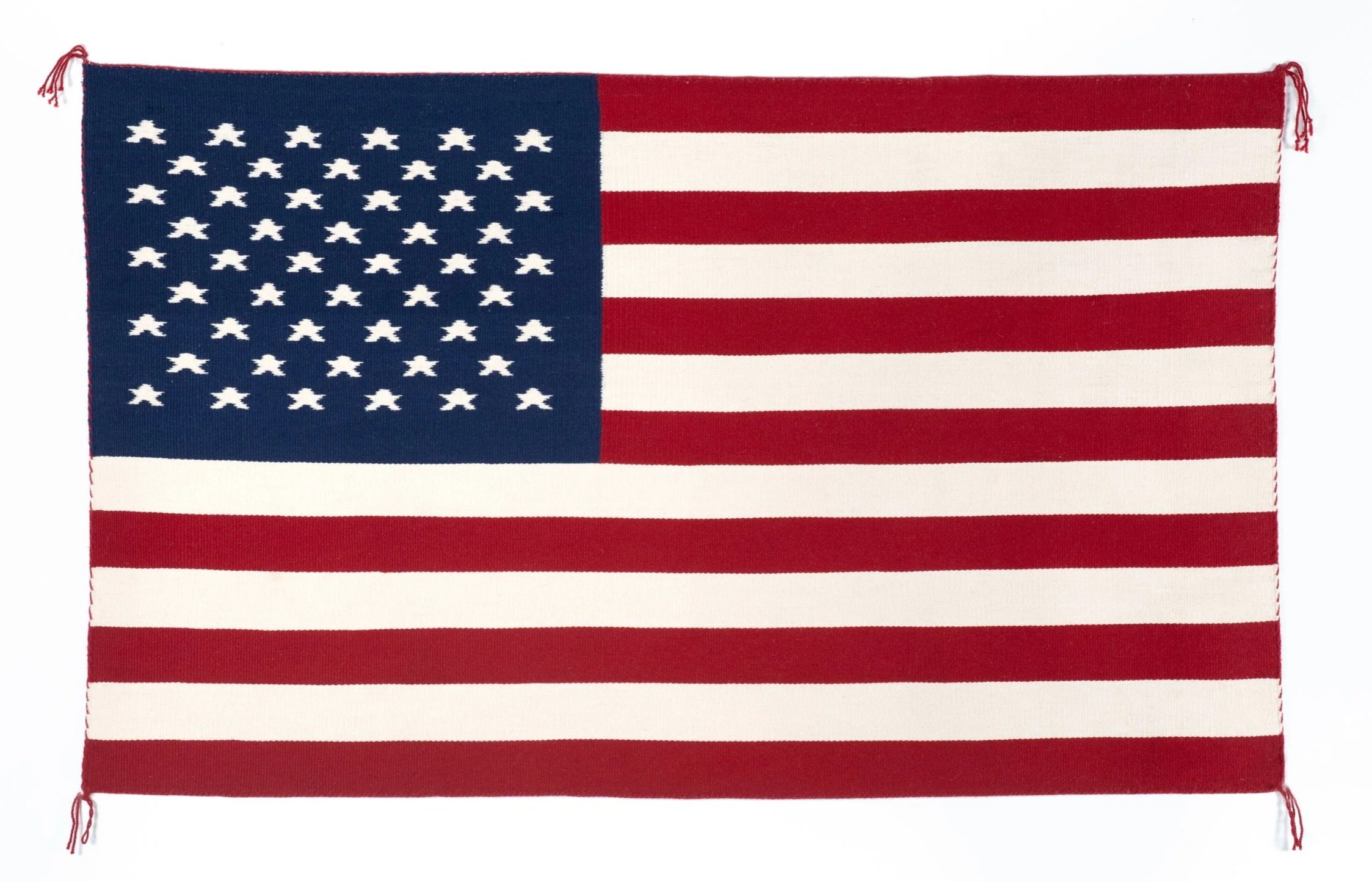
Bertha Harvey’s American flag holds its proportions with discipline. Stars remain measured, stripes deliberate. Yet this is unequivocally a Navajo textile – woven wool, tension held in structure, geometry carried through generational knowledge. The flag is neither altered nor caricatured. It is translated. In fiber, the national symbol becomes physical and enduring rather than rhetorical. The complexities of who created this artwork brings conversation around Nationhood to the forefront. The artwork lends itself to have an open-ended discourse about what it means to be American.
NICHOLAS GALANIN
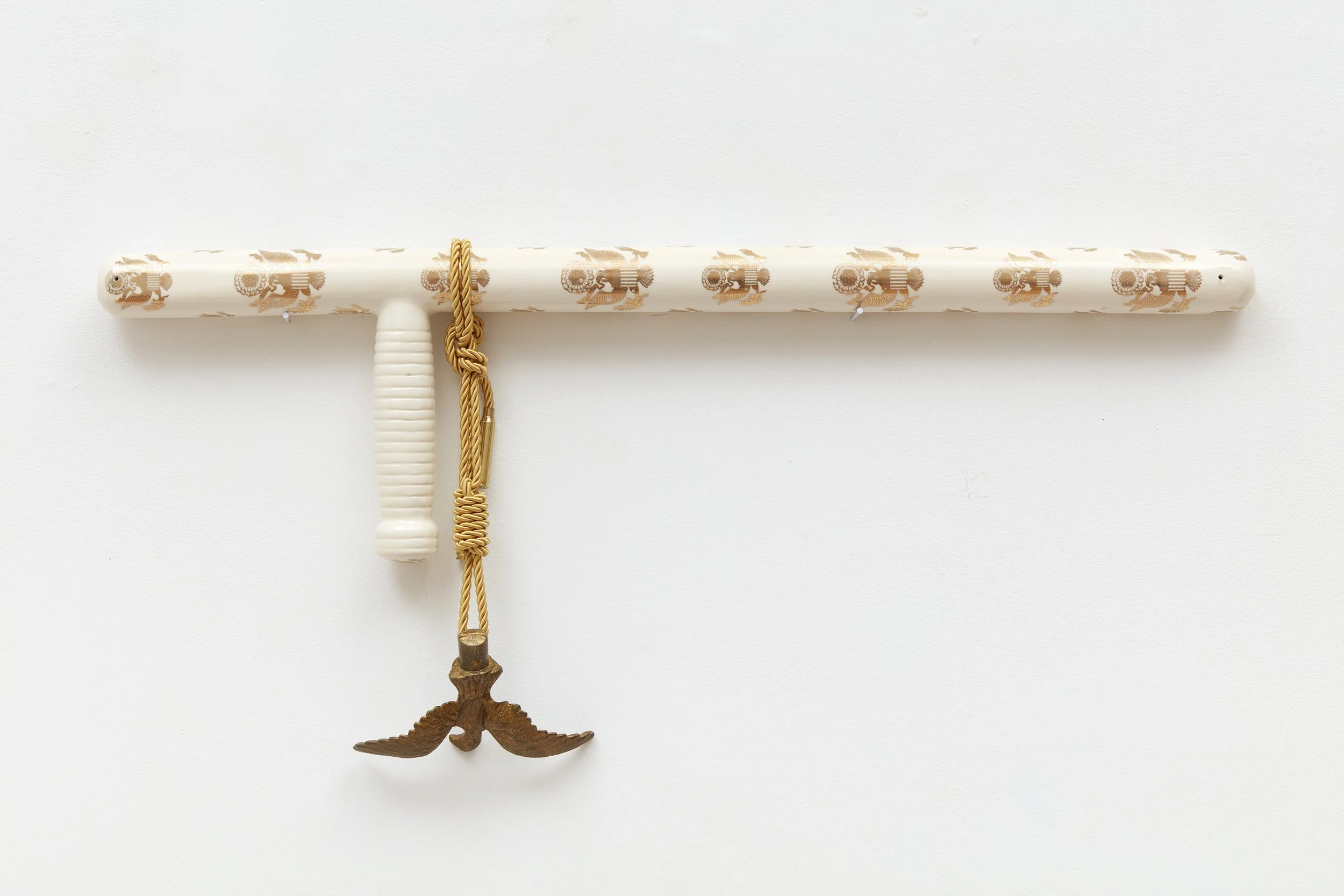
.Nicholas Galanin’s Talking Stick transforms a traditional Indigenous symbol of dialogue into a white porcelain police baton, gilded with the Great Seal of the United States. Porcelain – a material rooted in European colonial trade – embodies the fragility of the power structures it critiques. Suspended gold finials bearing a metal eagle and a bullet casing create a precarious balance, symbolizing how violence and nationalism underpin American authority. Galanin exposes the contradictions of patriotic imagery, reclaiming Indigenous ceremony to confront systemic oppression and outdated histories.
CRAIG GEORGE

Proud Father, 2025
George layers the scene with markers that carry historical weight—liquor signage, processed food, urban density—elements long tied to assimilation, economic pressure, and the health realities that have disproportionately affected Indigenous communities. They are present but not exaggerated. The father and daughter move through them with ease, smiling, grounded. The Pendleton blanket and the daughter’s traditional dress remain visible and unforced.
George does not dramatize conflict. He acknowledges the environment and allows continuity to hold. Tradition persists within the contemporary landscape, not apart from it.
RICK BARTOW
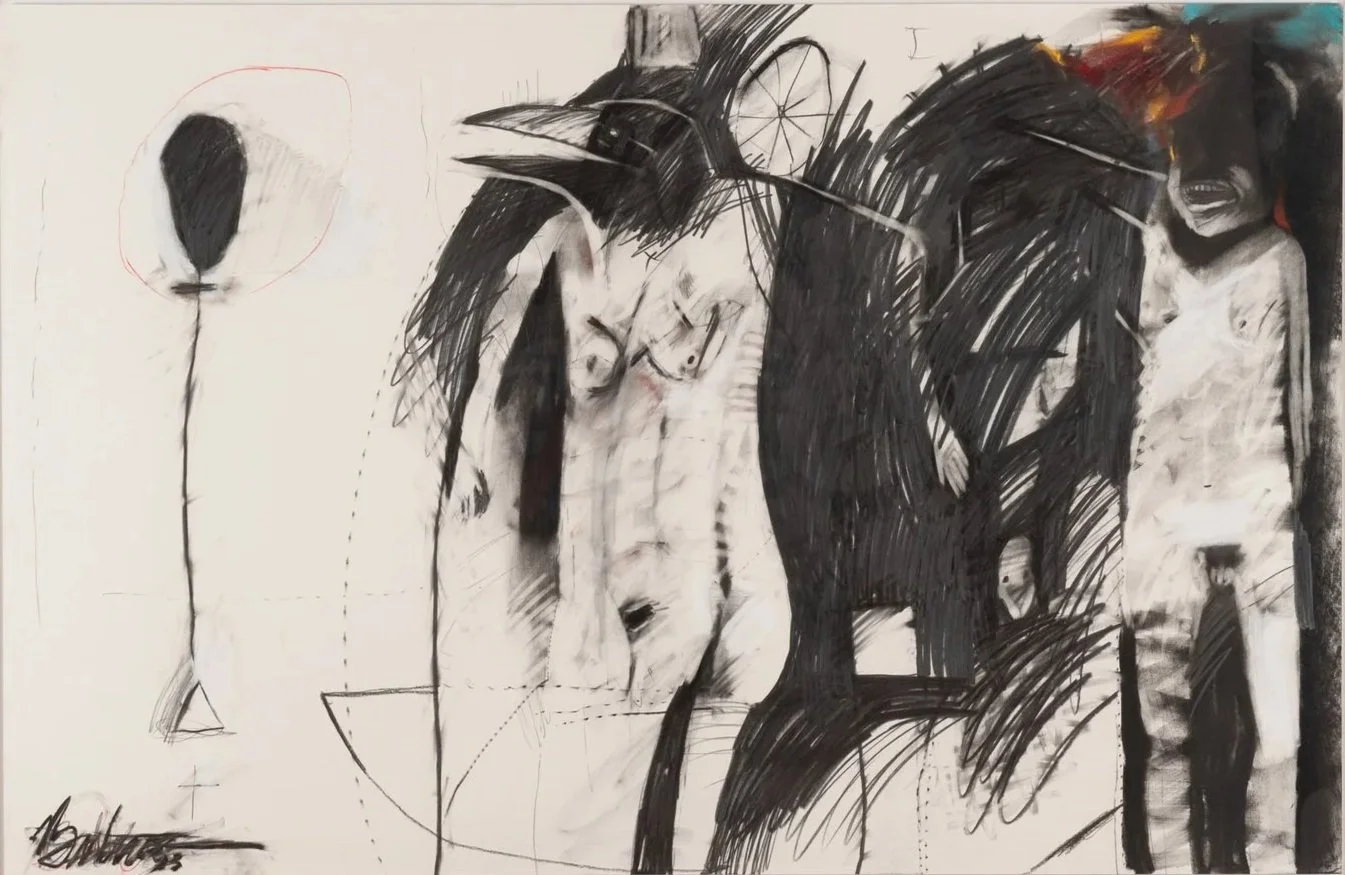
Ship of Fools, 1993
Rick Bartow’s boat carries figures caught in transformation. Human and animal forms merge without clear hierarchy. The drawing is physical – pastel pressed with restraint, graphite reworked. Bartow’s imagery is psychological but never abstracted from lived experience. The vessel reads as passage, burden, and reckoning simultaneously.
CARA ROMERO
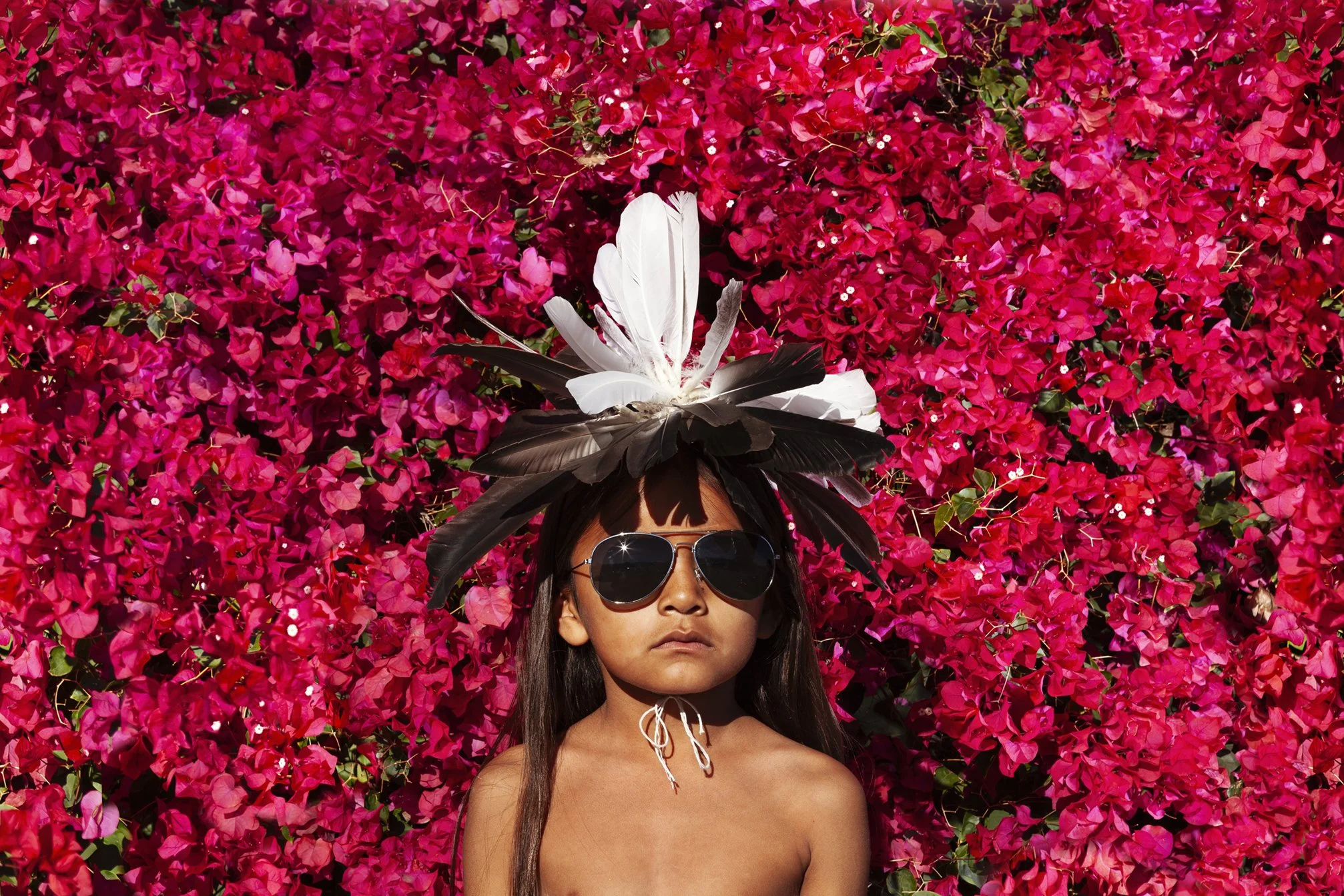
Surrounded by thousands of vibrant red bougainvillea blooms, a young time traveler wears a feather bundle on his head and aviators to shade his eyes from the brightness of the sun. Worn together, these accessories signal a disruption of linear time. Unbothered by record-breaking heat and known for its resilience and long bloom season, the bougainvillea thrives in the harsh climate of the Mojave Desert. Here, it becomes a colorful metaphor for the Chemehuevi and other Indigenous peoples who have lived in the Mojave Desert for thousands of years.
– Cara Romero
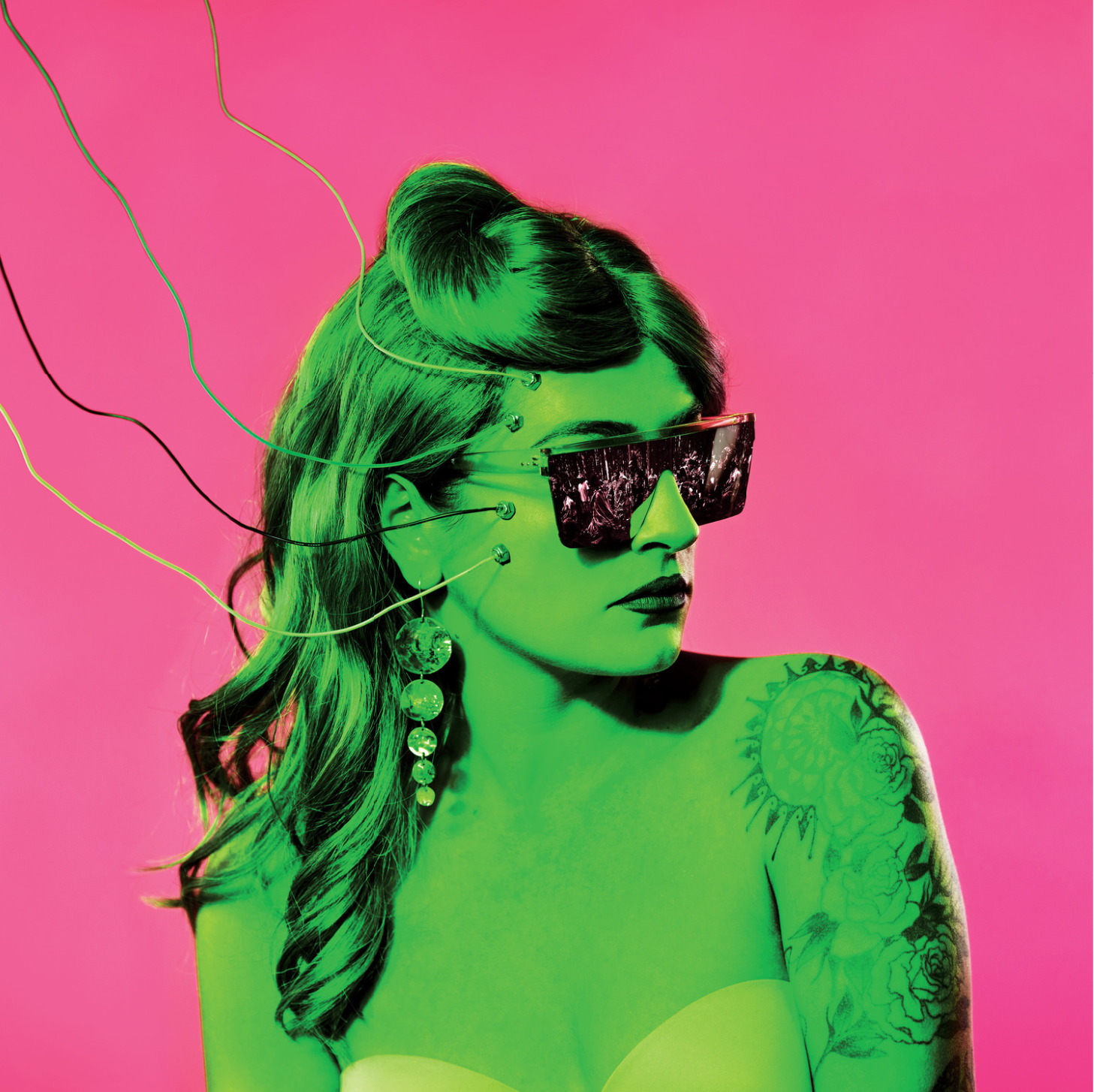
This image features fellow photographer Leah Kolakowski (Keweenaw Bay Ojibwe), who appears as a humanoid extraterrestrial with green skin—a riff on the idea of aliens as “little green men”—against a hot pink background. These vibrant colors were created using gels on the lights in Romero’s studio. Look closely at Leah’s sunglasses and you will see powwow dancers from Keweenaw reflected in their lenses, an image added in post-production. In Anishinaabemowin, the language of Leah’s tribe, the title of this image, Gikendaaso, means “one who knows, or one who is smart, intelligent, or educated.” The wires connected to her head signal the transmission of knowledge but lead us to wonder whether they are transmitting to or from the figure, or perhaps both.
WILL WILSON
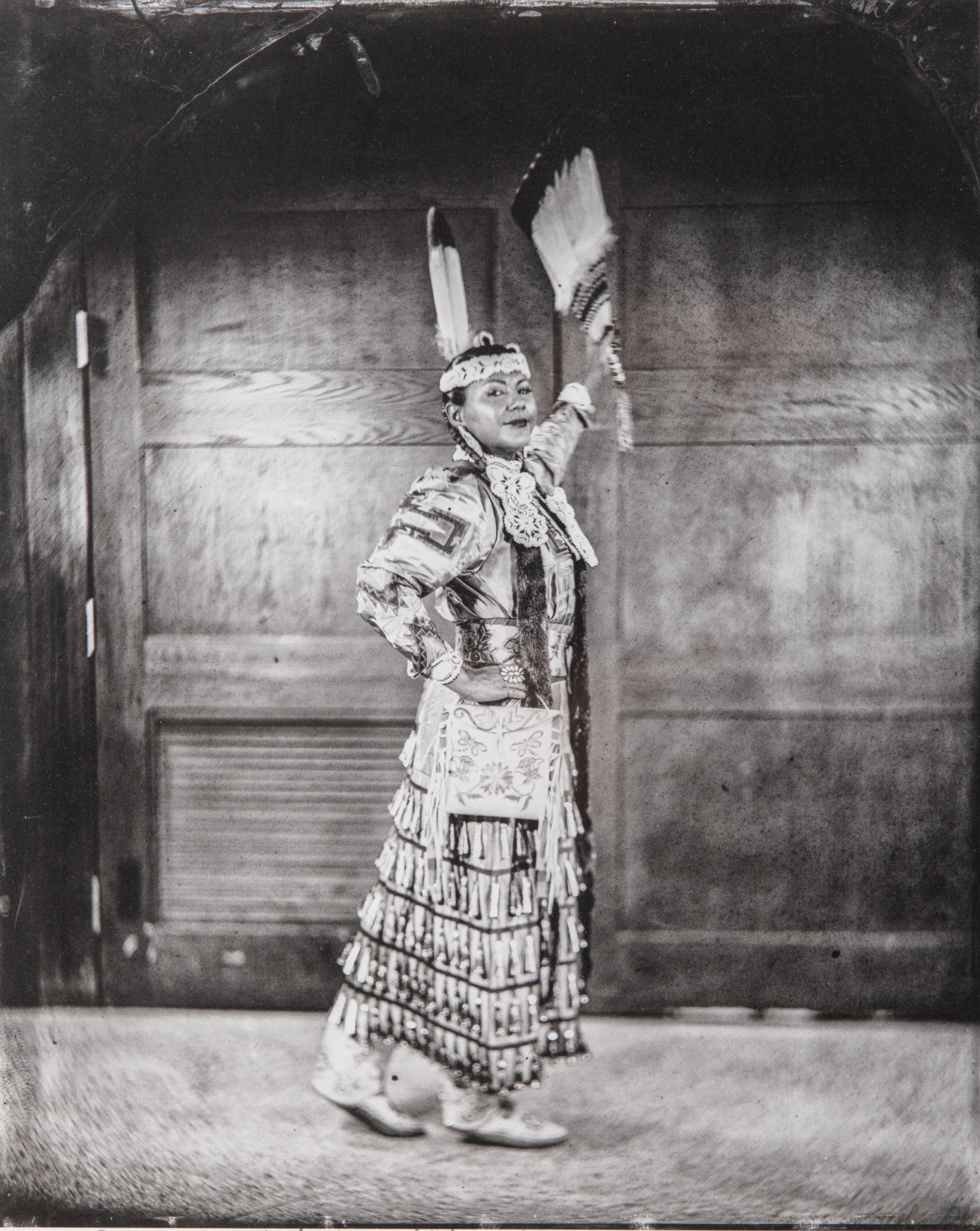
Wilson reclaims early photographic process without replicating its gaze. The portrait is formal and steady. The sitter is fully identified – dancer, professional, contemporary leader. The augmented component activates the image without spectacle. Wilson’s project is clear: representation authored from within.
CHRIS PAPPAN
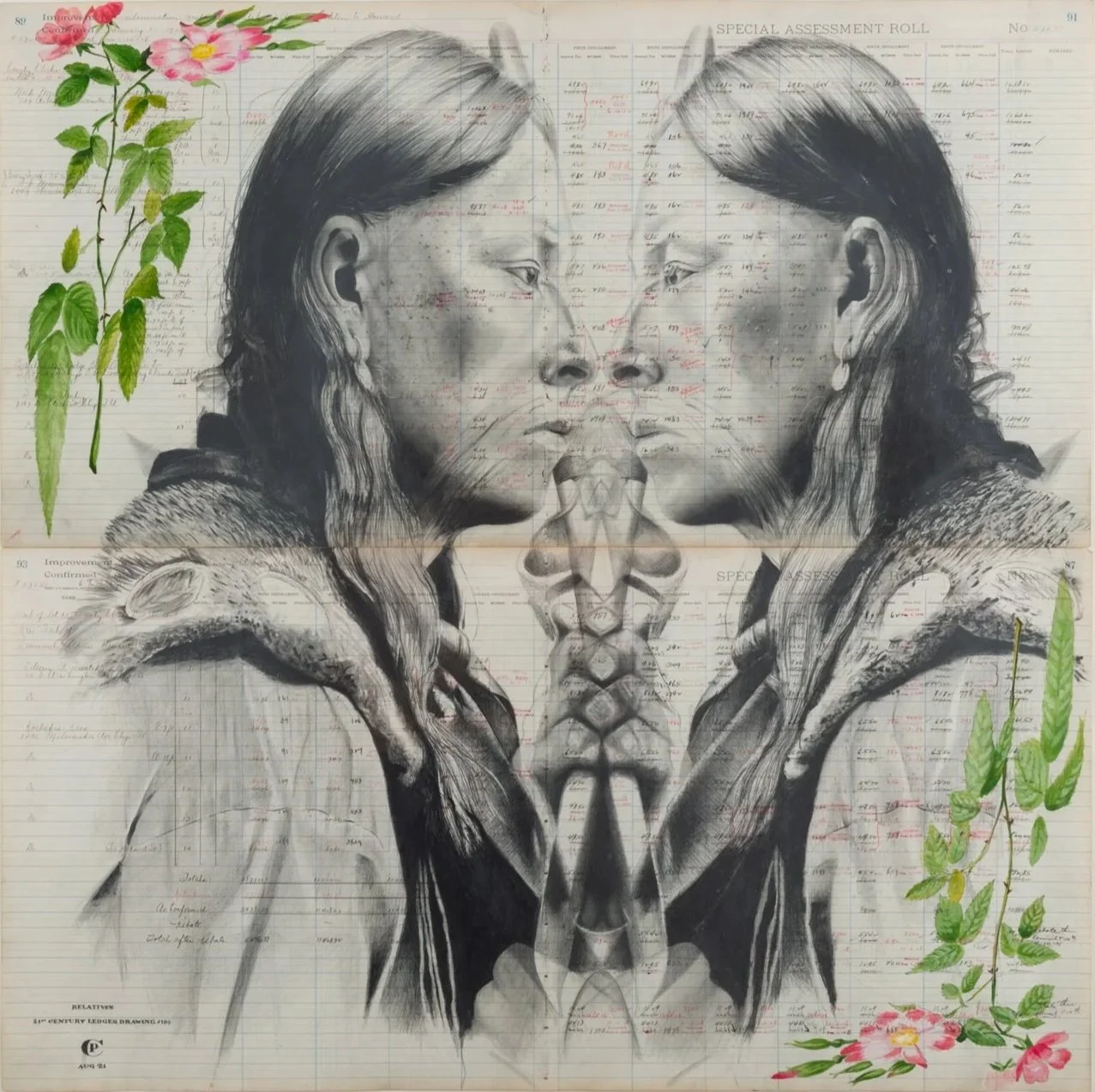
Pappan’s use of ledger paper is exact. The lined surface remains visible, its administrative history intact. Figures and marks overlay that ground without erasing it. The work acknowledges Plains ledger tradition while asserting contemporary authorship. Kinship here is structural rather than sentimental.
CANNUPA HANSKA LUGER
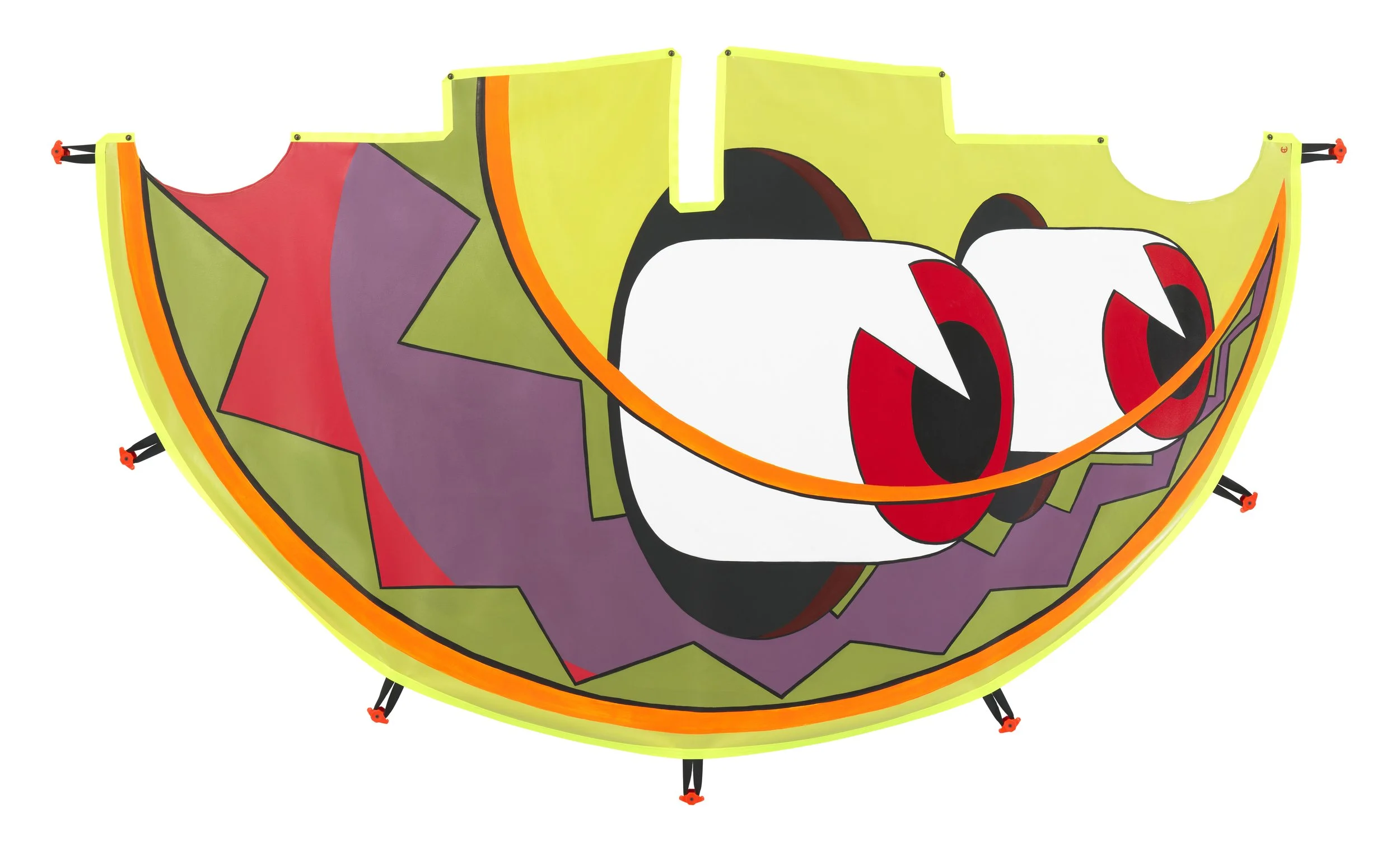
Surveillance, 2023
Luger paints directly onto a contemporary teepee, using it as both architectural form and image surface. Across it, eyes explode outward in exaggerated cartoon distortion—recalling early animation, the manic elasticity of Coyote and Road Runner. The humor is intentional and disarming.
The teepee, historically a site of family and protection, becomes a field of amplified watching. Surveillance here is not abstract; it is tied to government presence, oversight, and the long history of monitoring Indigenous communities. The cartoon language sharpens the critique. What reads as playful becomes hyper-vigilant. The work holds color, scale, and irony in balance, allowing the structure itself to carry the tension.
KENT MONKMAN
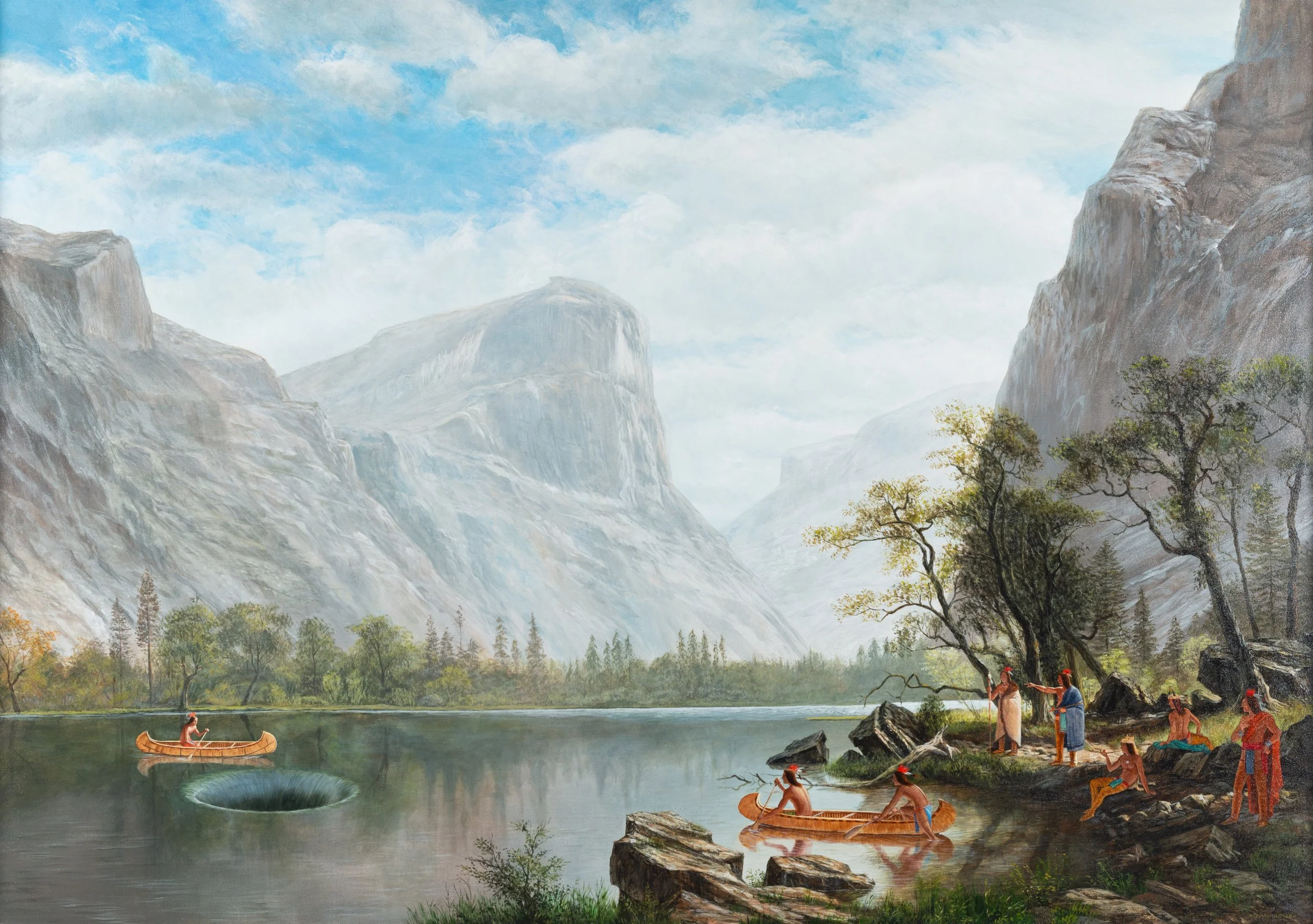
Monkman borrows the compositional language of Albert Bierstadt – sweeping landscape, luminous atmosphere, monumental scale – and intervenes directly within it. Indigenous figures appear in canoes across the water, not as incidental details but as active participants in the scene. The insertion is deliberate and corrective.
At the center of the lake, a dark void opens – an ominous black hole disrupting the romantic calm associated with 19th-century American landscape painting. The gesture unsettles Bierstadt’s vision of untouched wilderness and manifest destiny. Monkman preserves the grandeur of the original vocabulary while altering its authorship. The painting remains visually seductive, but the narrative has shifted.
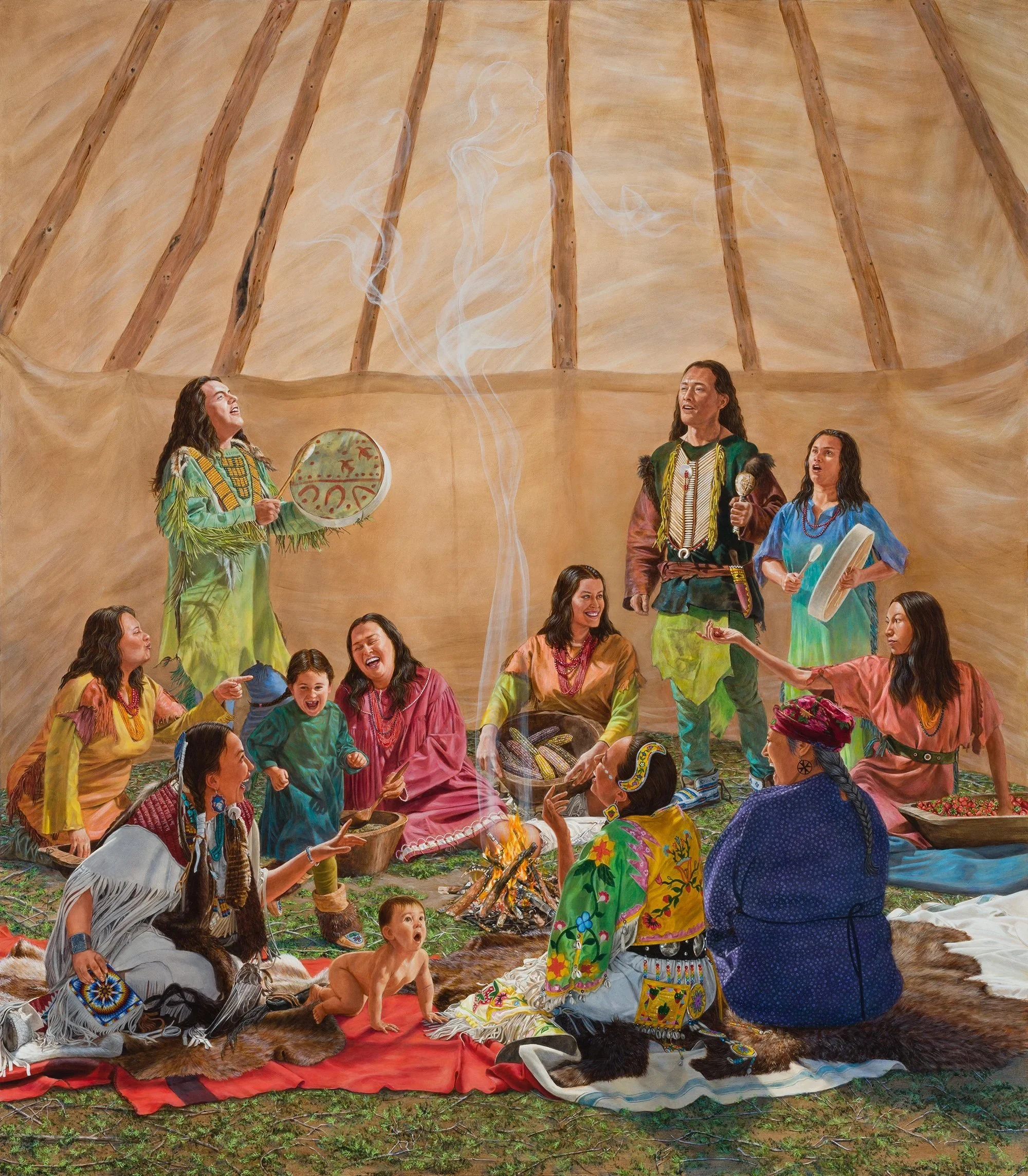
Kent Monkman reflects on storytelling as a living system through which cultural memory, spiritual presence, and communal identity are sustained. The work foregrounds oral tradition as a conduit between ancestors and future generations, emphasizing knowledge as relational, intergenerational, and rooted in place.
The composition aligns with Monkman’s broader project of reframing dominant historical narratives by centering Indigenous kinship, ceremony, and continuity. Rather than positioning these forces at the margins, the work asserts them as foundational structures through which history is carried, renewed, and made present.
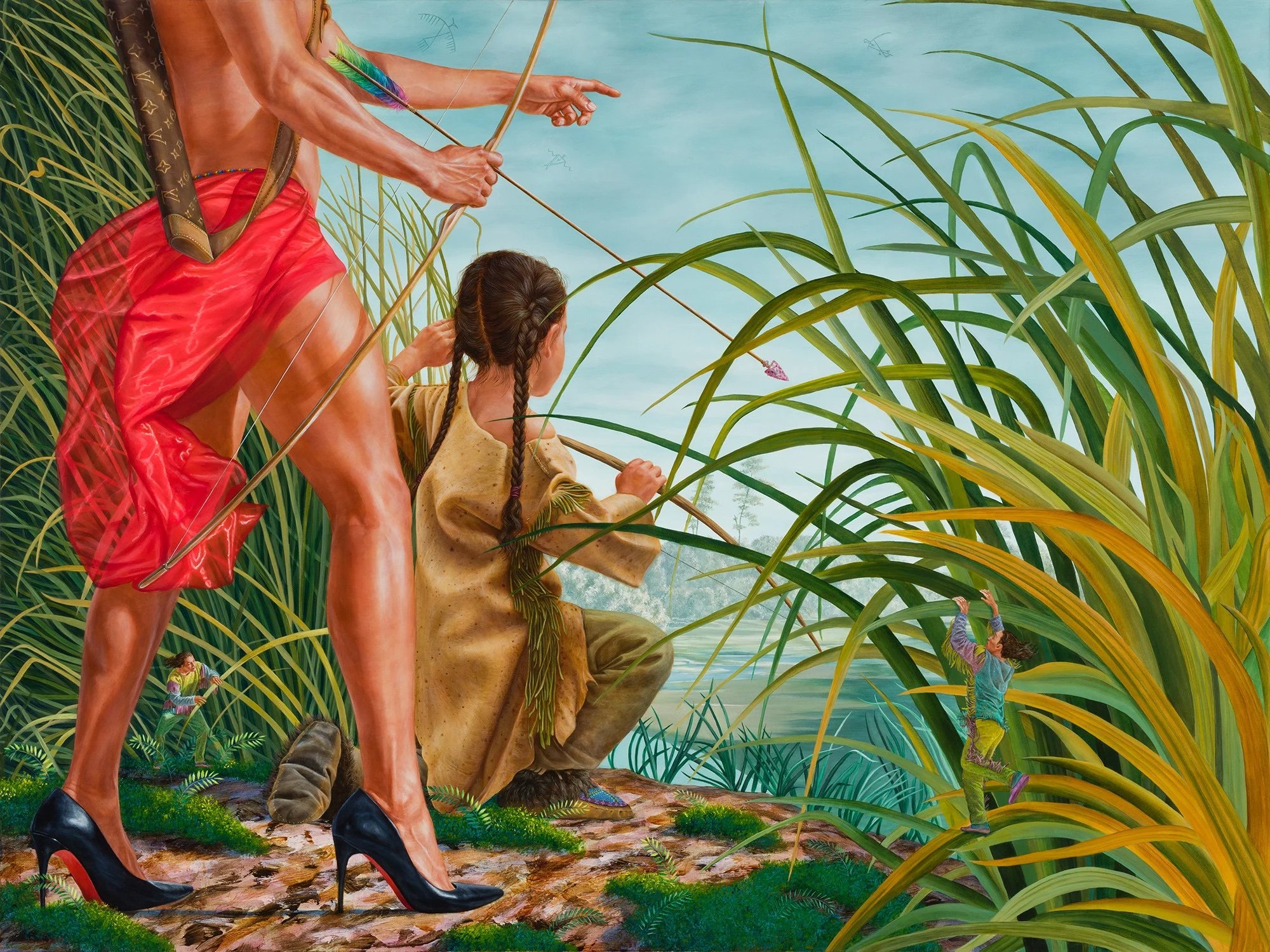
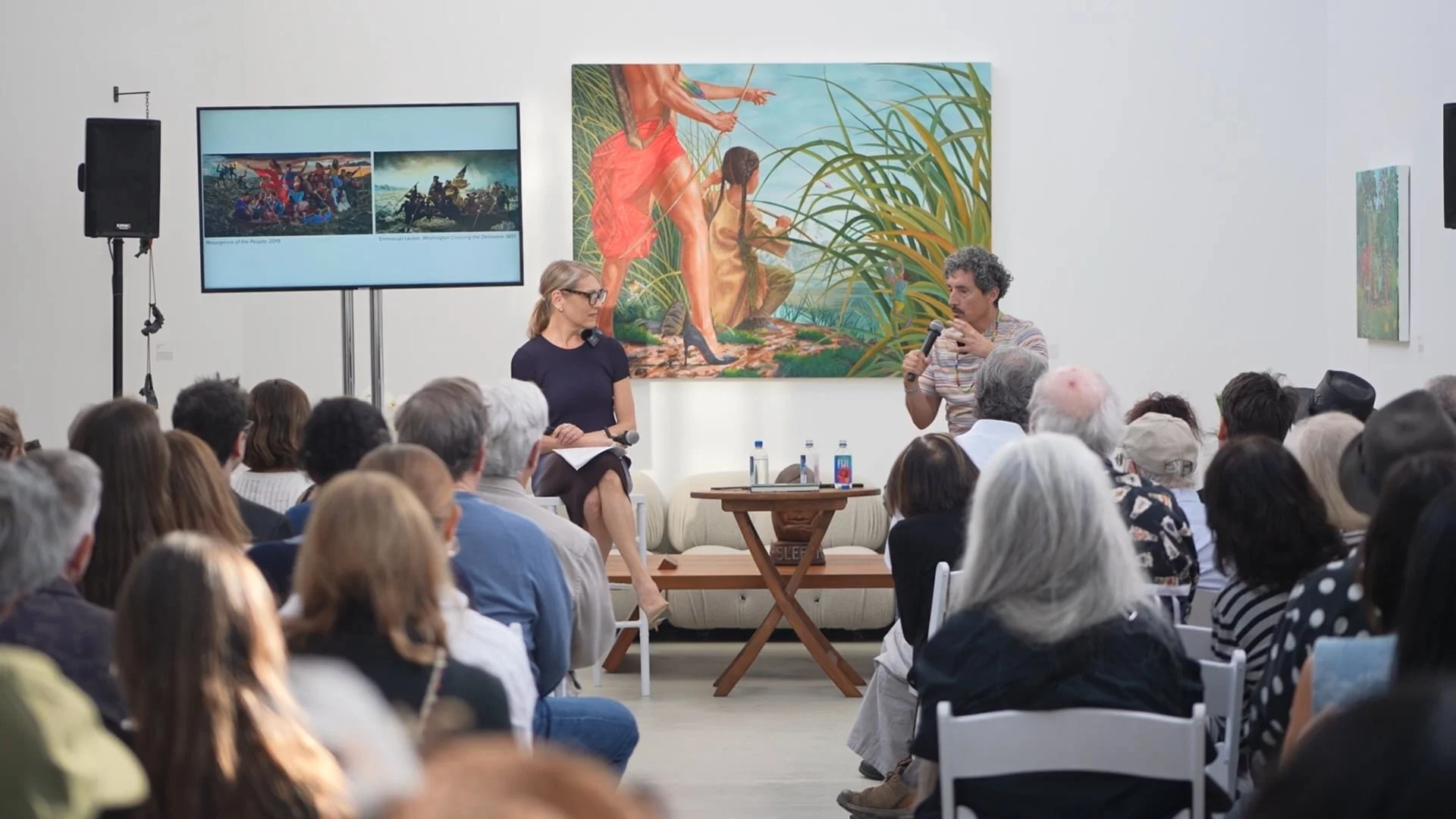
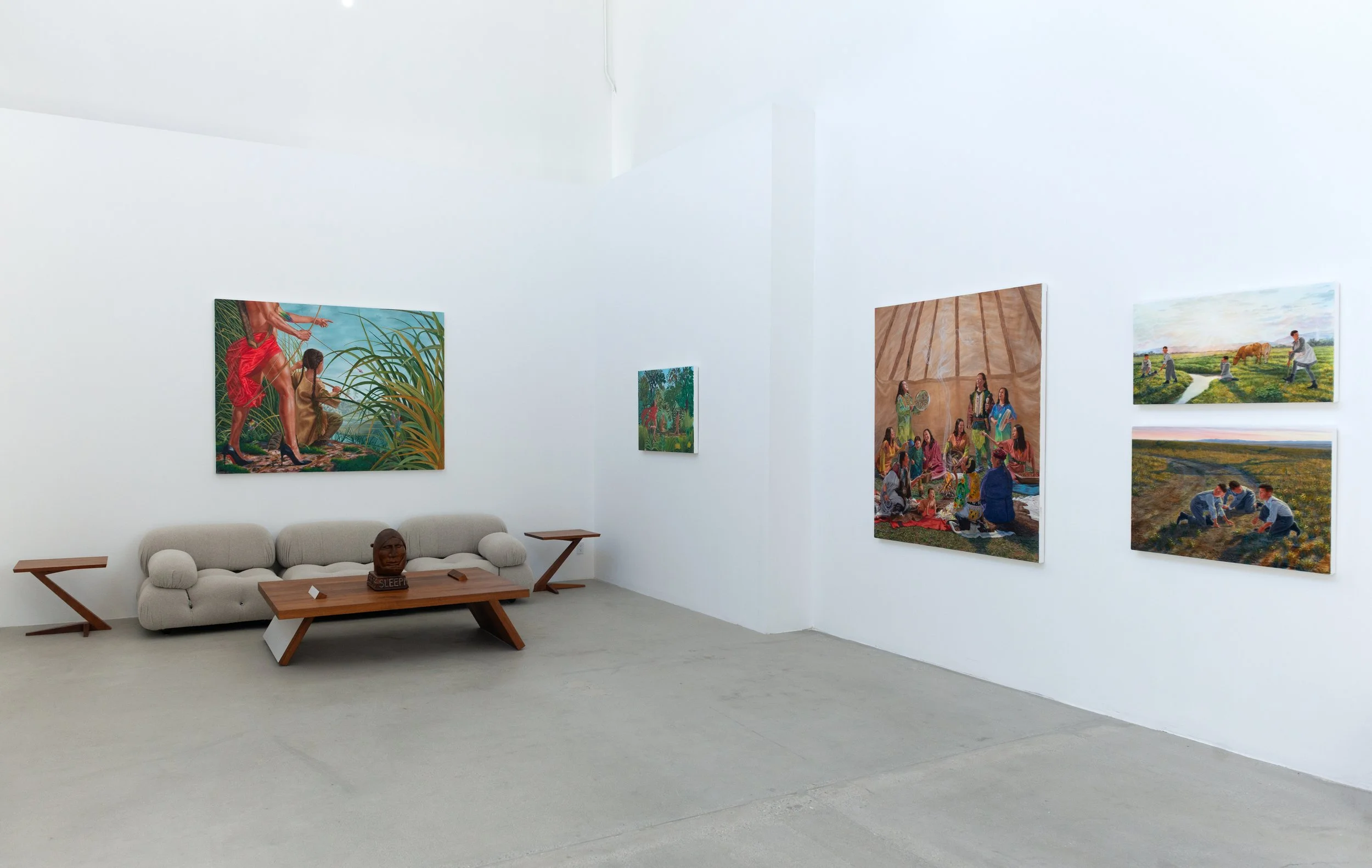
Kent Monkman stages an intimate yet monumental scene of instruction and presence. His gender-fluid alter ego, Miss Chief Eagle Testickle, stands poised in high heels and a vivid red garment, bow drawn, gesturing outward as a child crouches beside her in tall, enveloping grasses. Amid the shifting scale of the landscape, a small figure appears in the foreground—one of the mîmîkwîsiwak (the Little People), beings who, in Cree knowledge systems, have been here since before the oldest stories and who understand and honour the layers of memory held within the earth itself. Their presence folds spiritual time into the scene, suggesting that the transmission of knowledge extends beyond human generations into deeper cosmologies of land and story. Through hyperreal detail and subtle theatricality, Monkman reframes history not as absence or loss, but as enduring intelligence, relationality, and sovereignty.
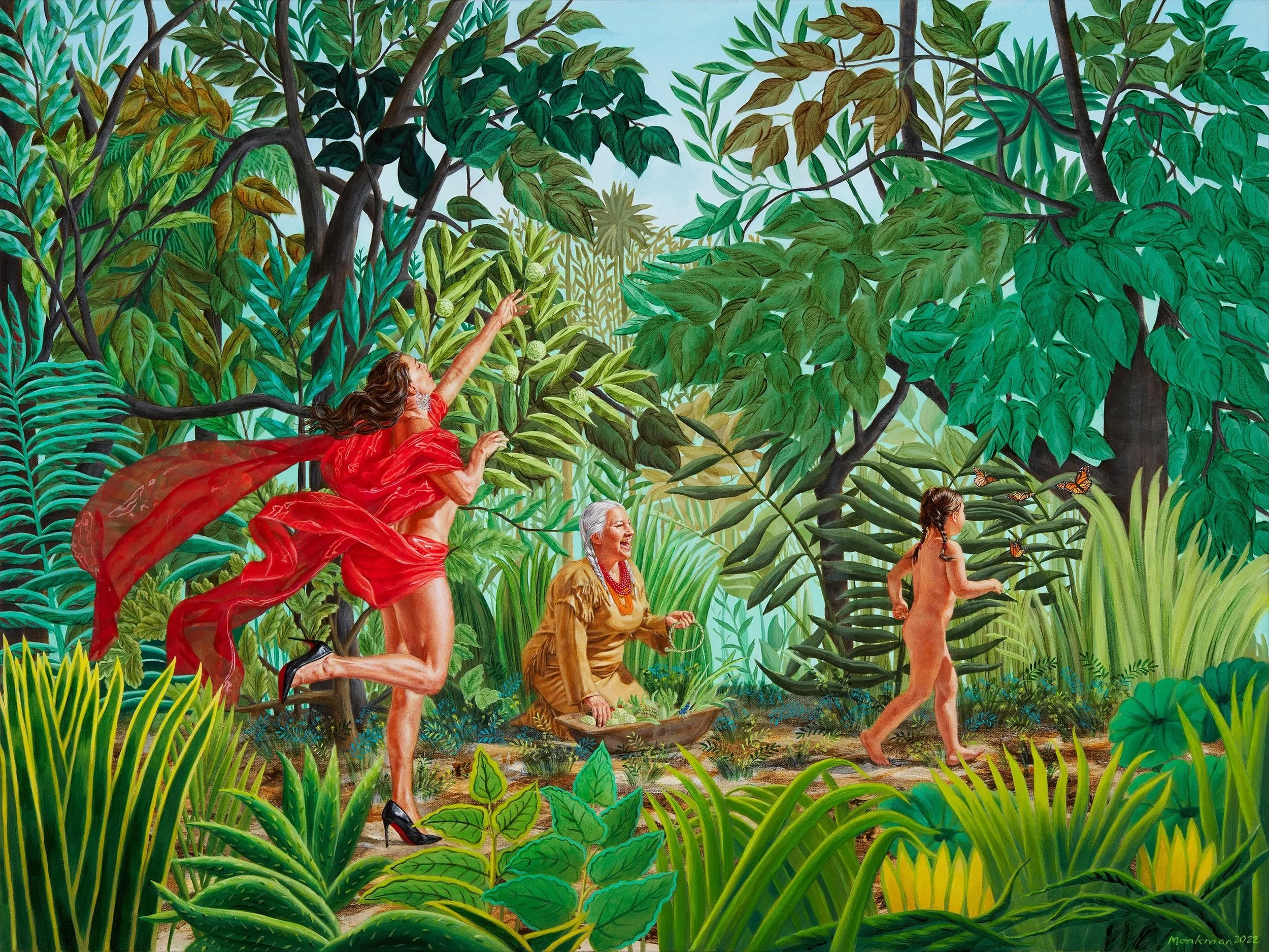
Drawing on the verdant, dreamlike language of Rousseau’s jungle scenes, Monkman situates Miss Chief Eagle Testickle—his gender-fluid, time-traveling alter ego—within a space shaped by Indigenous knowledge and kinship. Anchored by the grandmother’s medicinal understanding of the land and the presence of a child who carries that knowledge forward, the work emphasizes intergenerational continuity, resilience, and self-determined identity.
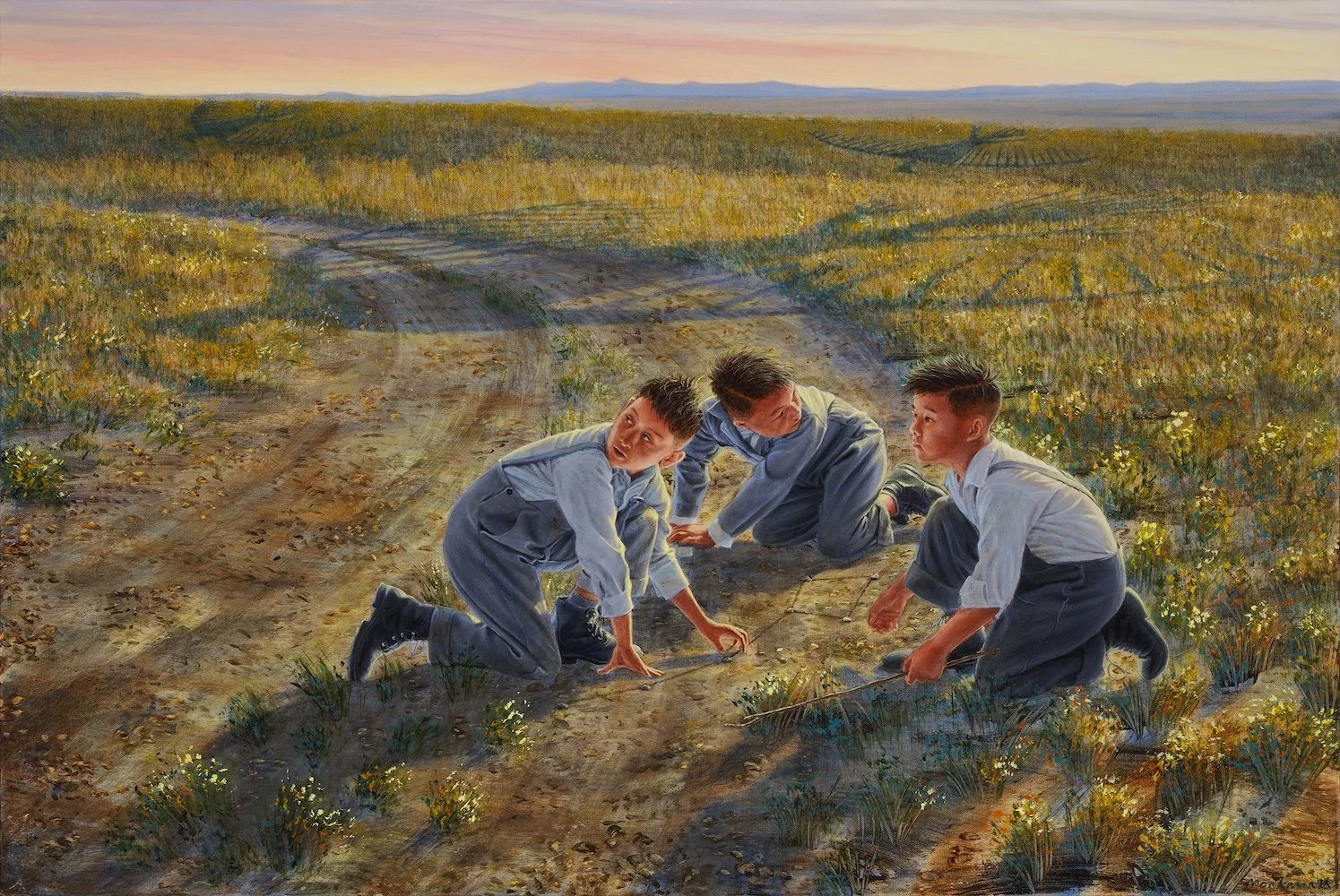
Many of our Elders and ancestors ran away from harm they experienced at the children’s work camps during the century that this ruthless assimilationist system was strictly enforced by government policy. Some of the children did not survive their journey home, which often involved travelling hundreds of miles by foot in unforgiving weather and rugged terrains. The tender-aged children in Study for The Going Home Star are depicted navigating their escape. The Going Home Star—kîwêtin acâhkos in Cree astronomy, known to some as Polaris, the North Star—stands still in the night sky, acting as a guide for travellers. Using traditional knowledge, the children plot their way home while the shadows of thunderbirds—their protectors—pass over them in the approaching dusk.
— Kent Monkman
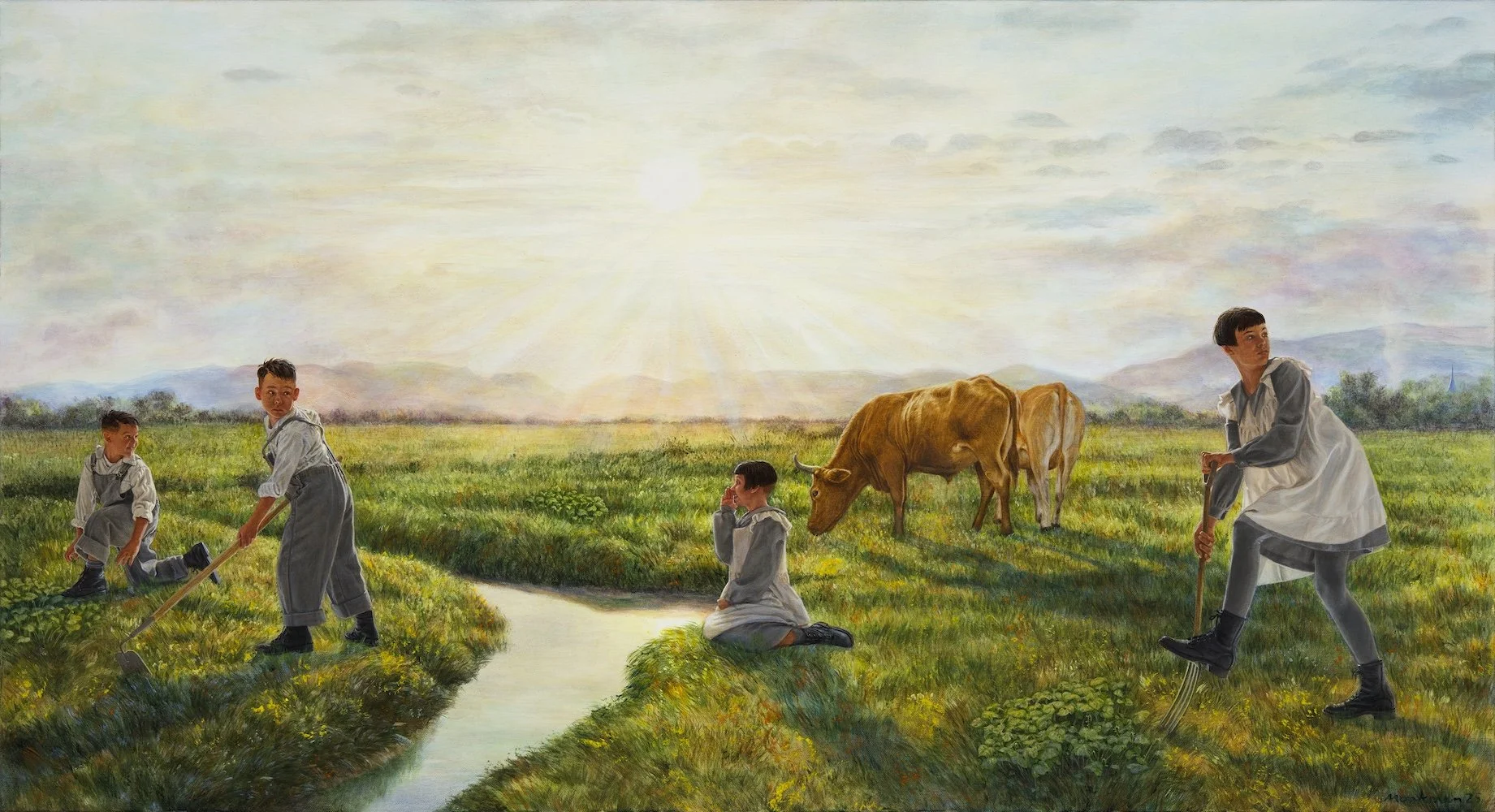
Study for nîtisân (My Sibling) is based on a Jules Breton painting and depicts four Indigenous siblings stealing a moment together during long hours of forced farm labour to secretly speak their language and harvest wild ginger—a medicine plant. Despite the buccolic serenity of the scene, the children are not out of harm’s way. Briefly reunited at a safe distance from the work camp buildings and the punitive gaze of their harsh schoolmasters, a young girl speaks softly in Cree to offer words of comfort to her homesick younger brother separated by a small creek. The painting reflects how the children’s work camps separated families and enforced strict gender binaries, but the children’s defiance in speaking Indigenous languages despite the risk of harsh punishment, and their practice of covertly harvesting medicinal plant knowledge, speaks to the resilience of Elders in preserving our ways of knowing.
— Kent Monkman
ROSE SIMPSON
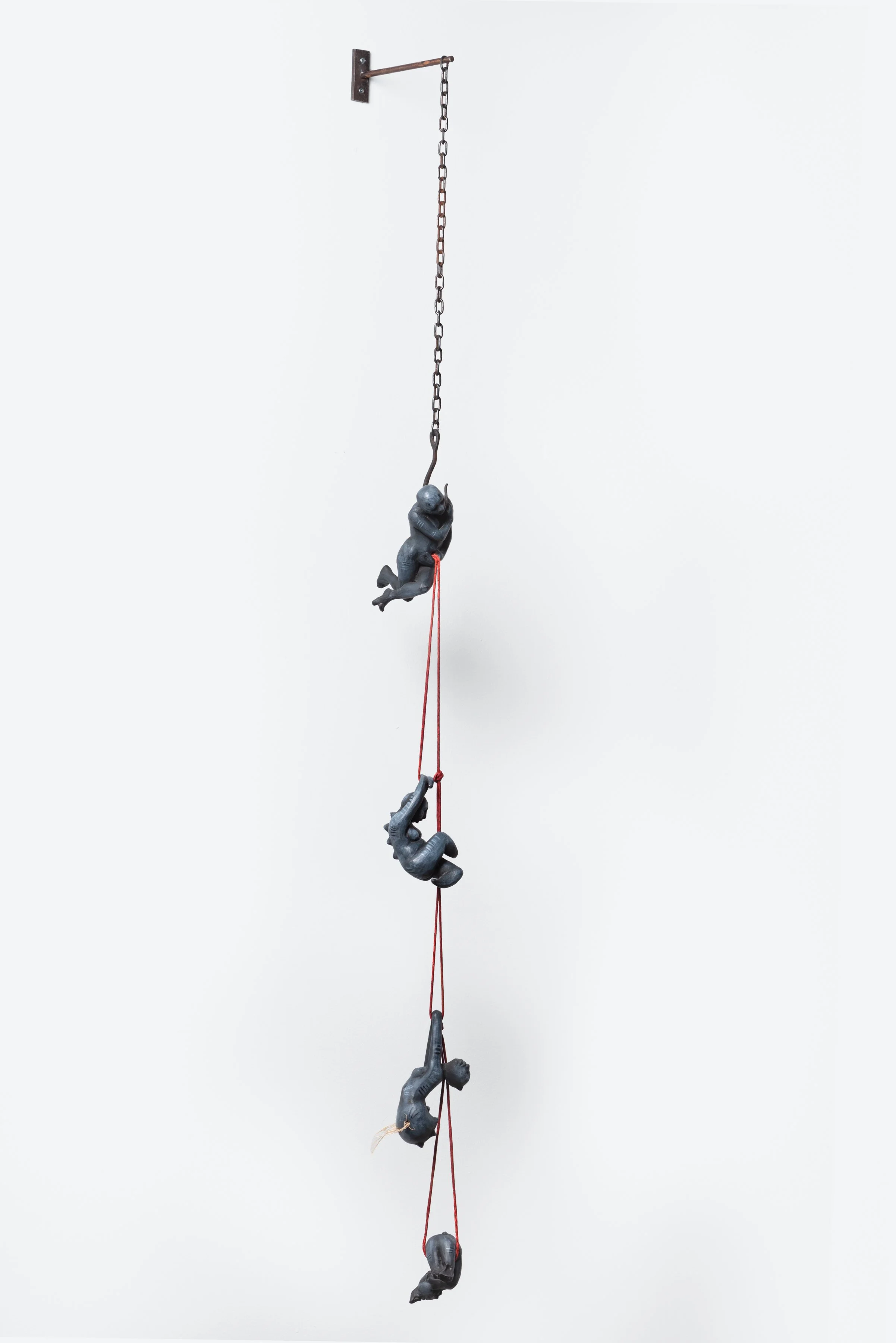
Generations, circa 2016
Simpson structures this work around tension and reliance, offering a clear homage to Indigenous matriarchal systems. Industrial hardware intersects with hand-built ceramic; support is visible and uncompromising. The figures are distinctly female, each singular yet part of a shared structure. Throughout her practice, Simpson returns to lineage, responsibility, and inherited strength—how identity is carried forward through women who absorb pressure without surrendering form. In Generations, endurance is built into the architecture of the piece itself.
VIRGIL ORTIZ
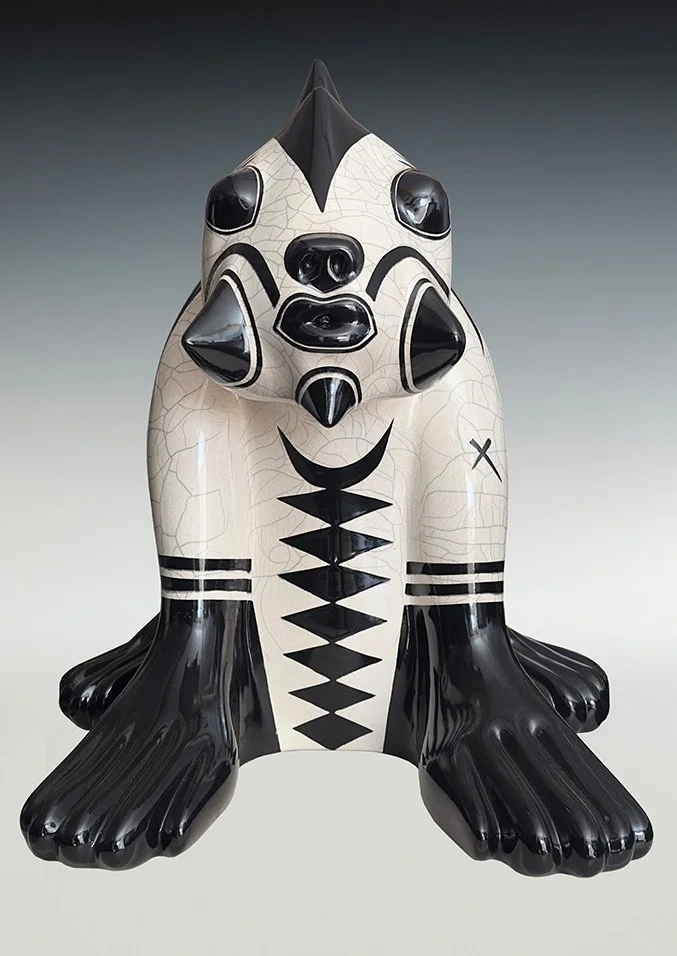
Sika, Than, 2024
Virgil Ortiz’s visionary Revolt 1680/2180 saga sets the stage for Sika, Than—a clay creation bridging centuries and galaxies in one powerful form. Ortiz’s art is more than retelling history. It becomes insurgent imagination, projecting the Pueblo Revolt of 1680 into distant futures where resistance, identity, and survival transcend time and space.
Within this universe, Sika, Than, emerges as a guardian. This figure symbolizes hope, vigilance, and survival. The hybrid form blends Pueblo traditions—motifs or features from art or stories—with imagined elements of the cosmos. It reflects the resilience of a people who draw strength from ancestral memory. Ortiz invites us to imagine new worlds. In these worlds, heritage is preserved, evolves, and flourishes. Protectors shield it as they cross the boundaries of past, present, and future.
Ortiz’s work urges viewers to consider defending culture amid erasure and displacement. It prompts reflection on guardianship when the fight is for land, memory, language, and belonging. His narrative sparks vital dialogue about sovereignty, futurity, and the transformative power of Indigenous futurism.
To encounter the Sika is to stand at a portal—a threshold between past and future. This moment compels us to honor history. It also inspires us to imagine worlds still to be created.
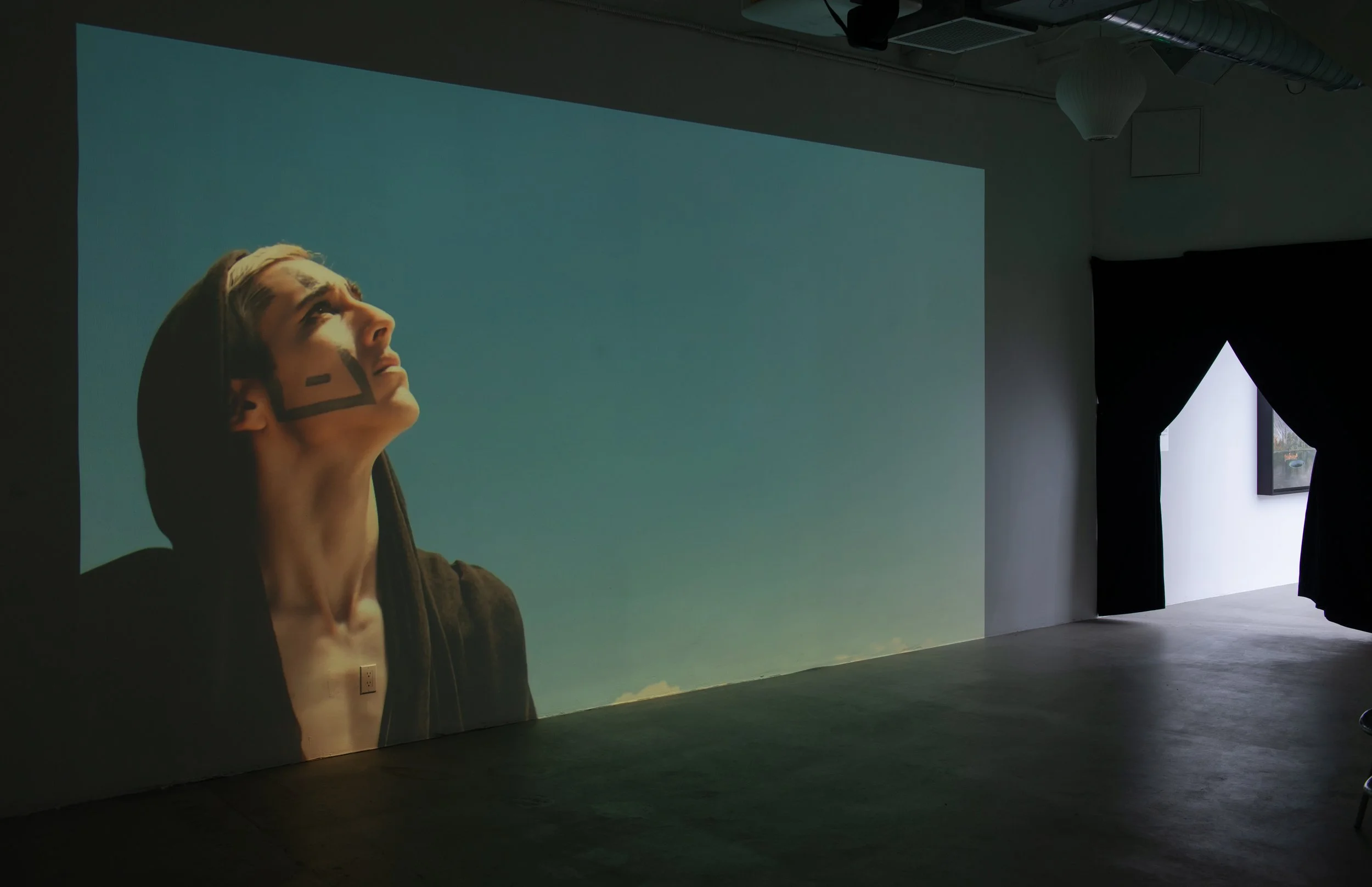
Revolt 1680/2180: Sovereign Continuum, 2026
Revolt 1680/2180: Sovereign Continuum extends Virgil Ortiz’s epic narrative from the 1680 Pueblo Revolt into a visionary future set in 2180. Through pivotal figures—Po’pay, the Blind Archers, the Recon Watchmen, the Sirens, and the Sikas—the work reimagines Pueblo resistance as an unbroken lineage of Indigenous authority.
Within this unfolding arc, Sika emerges as both guardian and witness—an embodiment of ancestral force propelled forward through time. Here, revolt becomes momentum, and sovereignty is realized as destiny.