
JAMIE OKUMA
Jamie Okuma (b. 1977) is a multidisciplinary Native American artist. Works by Jamie Okuma are available through Trotta-Bono Contemporary, a by-appointment gallery specializing in contemporary Native American art in Santa Monica, California.
— SELECTED WORK —
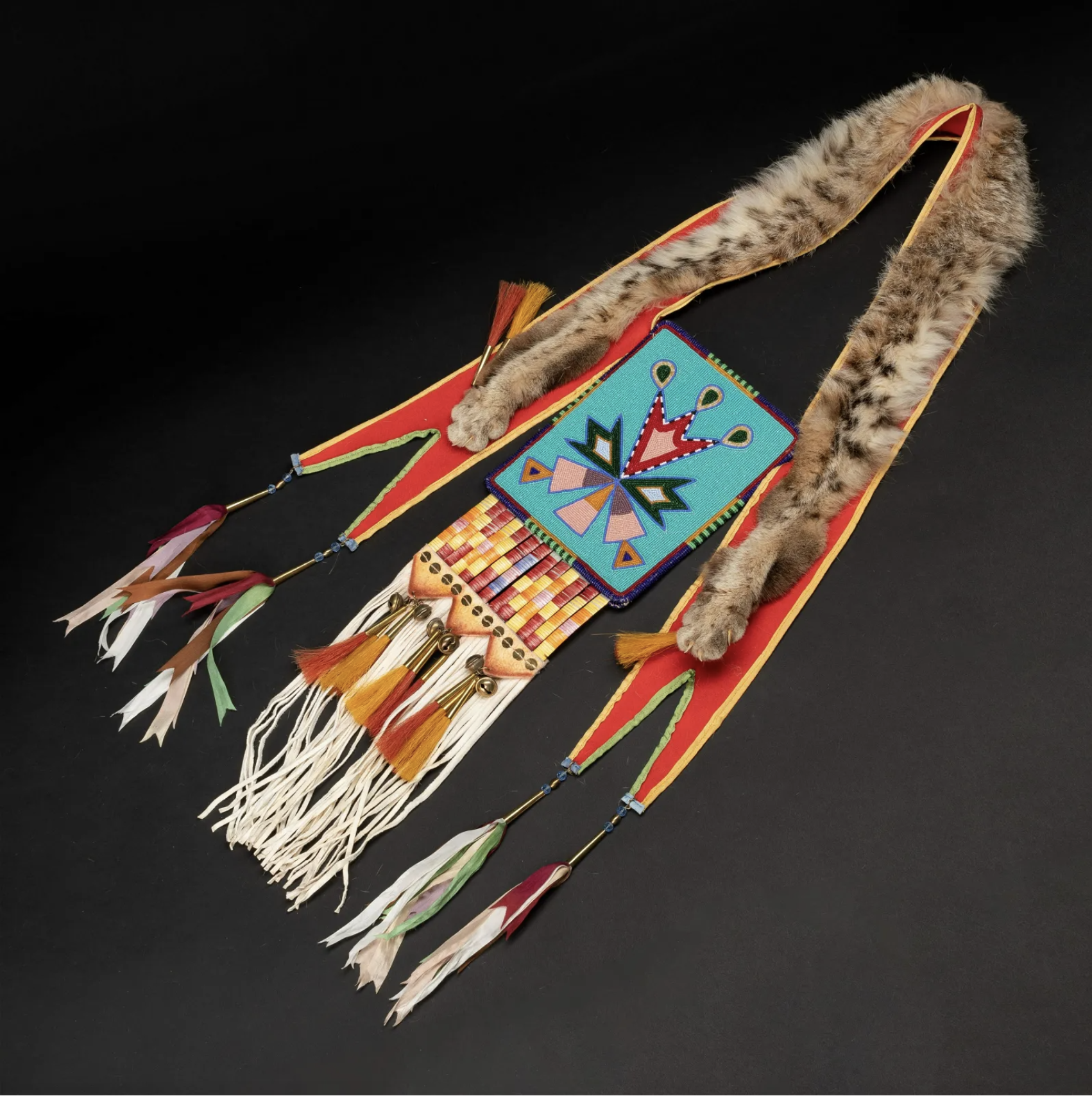
Beaded Bag
– JAMIE OKUMA –
Luiseno, Shoshone-Bannock, Wailaki, 1977–
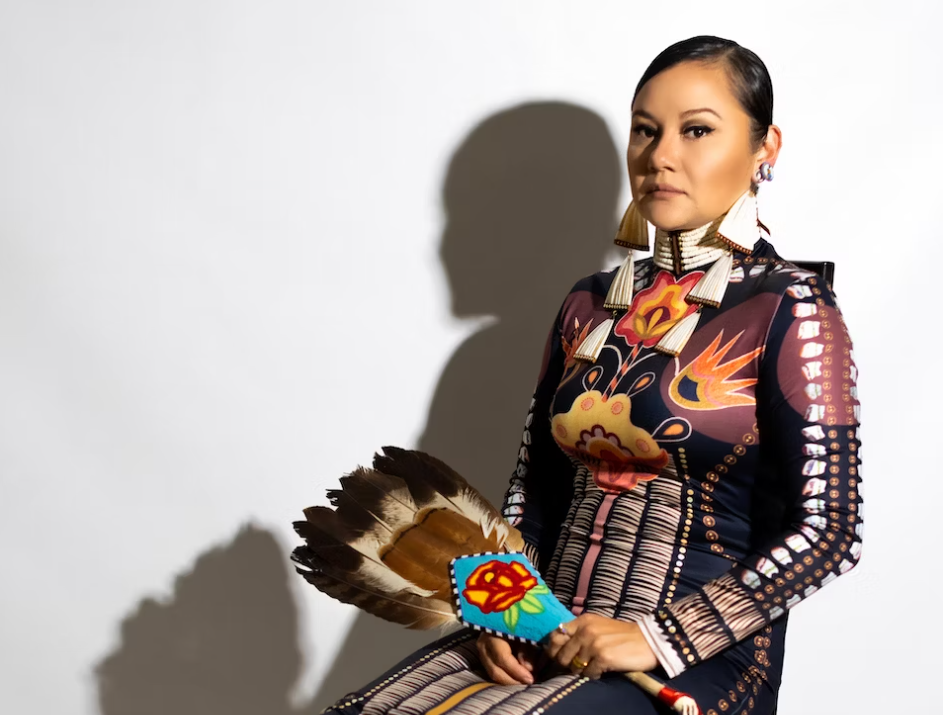
Jamie Okuma is a multidisciplinary Native American artist and fashion designer from Southern California. She is an enrolled member of the La Jolla Band of Luiseño Indians and also descends from Shoshone-Bannock, Wailaki, and Okinawan lineages. Raised on the La Jolla Reservation in Pauma Valley, Okuma developed exceptional technical skill and an eye for design from her mother, Sandra Okuma. She studied at Palomar College and later attended the Institute of American Indian Arts, training that helped her bridge traditional Native craft techniques and contemporary visual practice.
Okuma first gained broad recognition for intensely detailed beaded dolls and soft-sculpture works that reimagine and memorialize Native dress, portraiture, and narratives; these early pieces established her reputation for micro-bead precision and mixed-media assemblage. Over time she expanded into couture — beaded boots, handbags, and ready-to-wear garments that fuse historic Indigenous imagery and techniques with contemporary fashion silhouettes — while continuing to produce intimate sculptural works. Her work has repeatedly been honored at major Indigenous art markets: she has won multiple Best of Show awards at Santa Fe Indian Market and honors from the Heard Museum market, milestones that helped launch her into museum and gallery circuits.
Okuma’s work is held in the collections of several prominent institutions and has been widely exhibited. Museum acquisitions include pieces in the Metropolitan Museum of Art, the Smithsonian, the Denver Art Museum, the Minneapolis Institute of Art and the Nelson-Atkins Museum of Art. Her work was included in landmark group exhibitions of Native women artists and contemporary Indigenous makers, and she has shown both nationally and internationally in galleries and museum shows. In recent years she has received heightened visibility in the fashion world (including recognition by fashion media and participation in major presentation platforms) while continuing to be placed in museum displays and permanent collections.