
JOHN PANGNARK
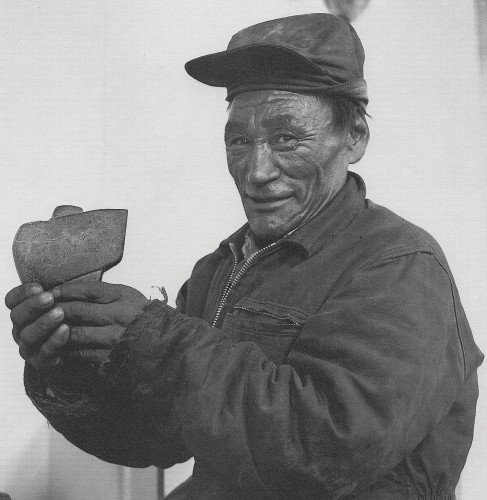
John Pangnark (1920–1980) was an Inuit sculptor. Works by John Pangnark are available through Trotta-Bono Contemporary, a by-appointment gallery specializing in contemporary Native American art in Santa Monica, California.
— SELECTED WORK —

Untitled

Untitled (Figure)

Untitled (Figure)
- JOHN PANGNARK -
Inuit, 1920-1980
John Pangnark (ᔭᓐ ᐸᓇ) was born at Windy Lake and later lived in Arviat (formerly Eskimo Point) in what is now Nunavut. He began carving in the mid-1960s after living a traditional inland Inuit life until the 1950s, and over roughly a decade and a half he established himself as one of the Kivalliq region’s most distinctive sculptors. Pangnark is commonly identified with the Ahiarmiut (the “people of the other side”) and worked primarily in local stones, producing compact, quietly powerful sculptures that quickly found their way into southern Canadian and international galleries.
Pangnark’s work is most often discussed for its move from figurative realism toward a pared-down, geometric abstraction. His signature language reduces the human figure to flattened planes, simple silhouettes and subtle notches for limbs, producing forms that feel simultaneously monumental and intimate; genders and specific features are often deliberately ambiguous. Critics and dealers have noted his focus on form and surface — smooth, almost architectural treatments of stone that emphasize rhythm and negative space — which places him among the Inuit carvers who translated traditional subject matter into a modernist sculptural vocabulary.
Pangnark’s carvings were included in important group touring exhibitions in the 1970s (notably the world tour Sculpture of the Inuit: Masterworks of the Canadian Arctic, 1971–73), and he was one of four Inuit artists invited to travel to Osaka for Expo ’70. His works have appeared in both museum and private collections and on the international auction market. Major institutional holdings and references note examples of his work in repositories such as the National Gallery of Canada and the Dennos Museum Center, and his pieces continue to be represented in gallery exhibitions and specialized Inuit art shows and catalogues.